


By Darby Kendall
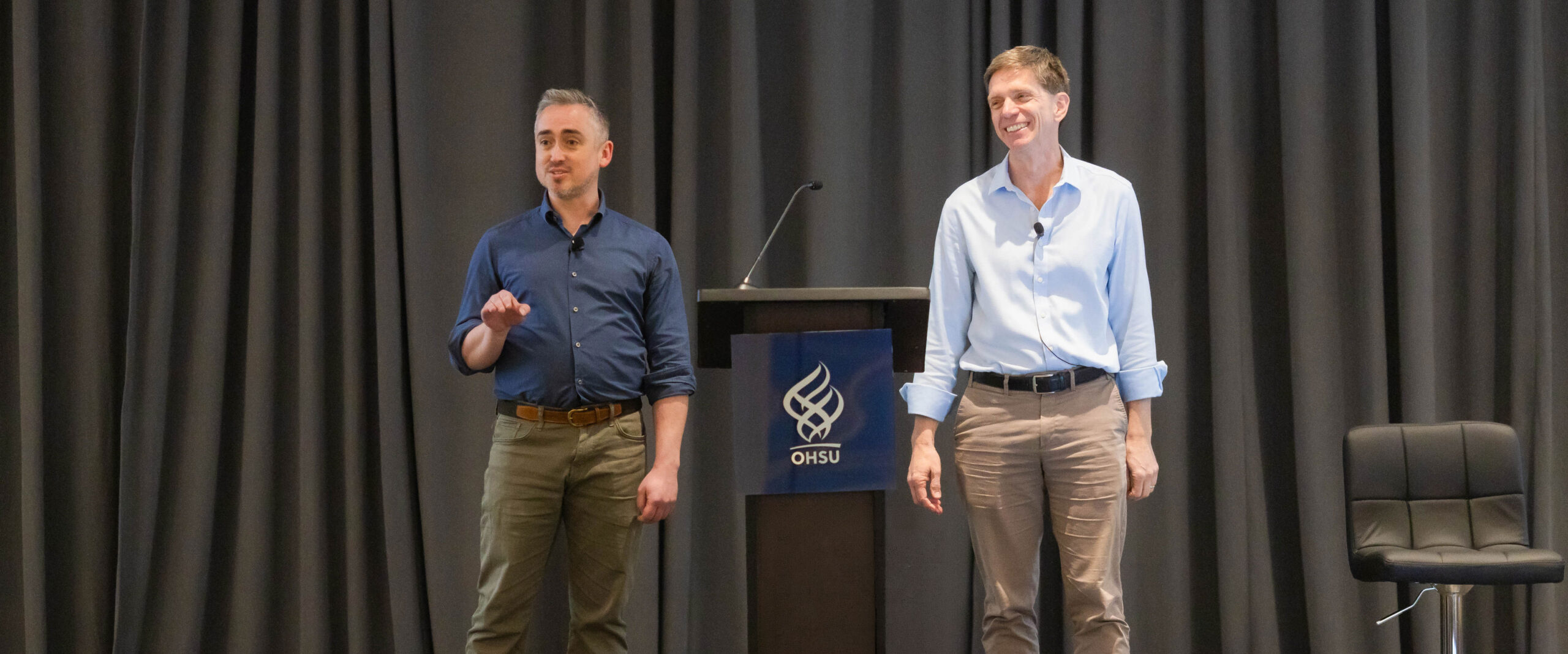
OHSU is a leader in psychedelic-assisted therapies, and Todd Korthuis, M.D., M.P.H., and Chris Stauffer, M.D., are helping pave the way. These therapies have the potential to transform treatment for mental health conditions, addiction and trauma.
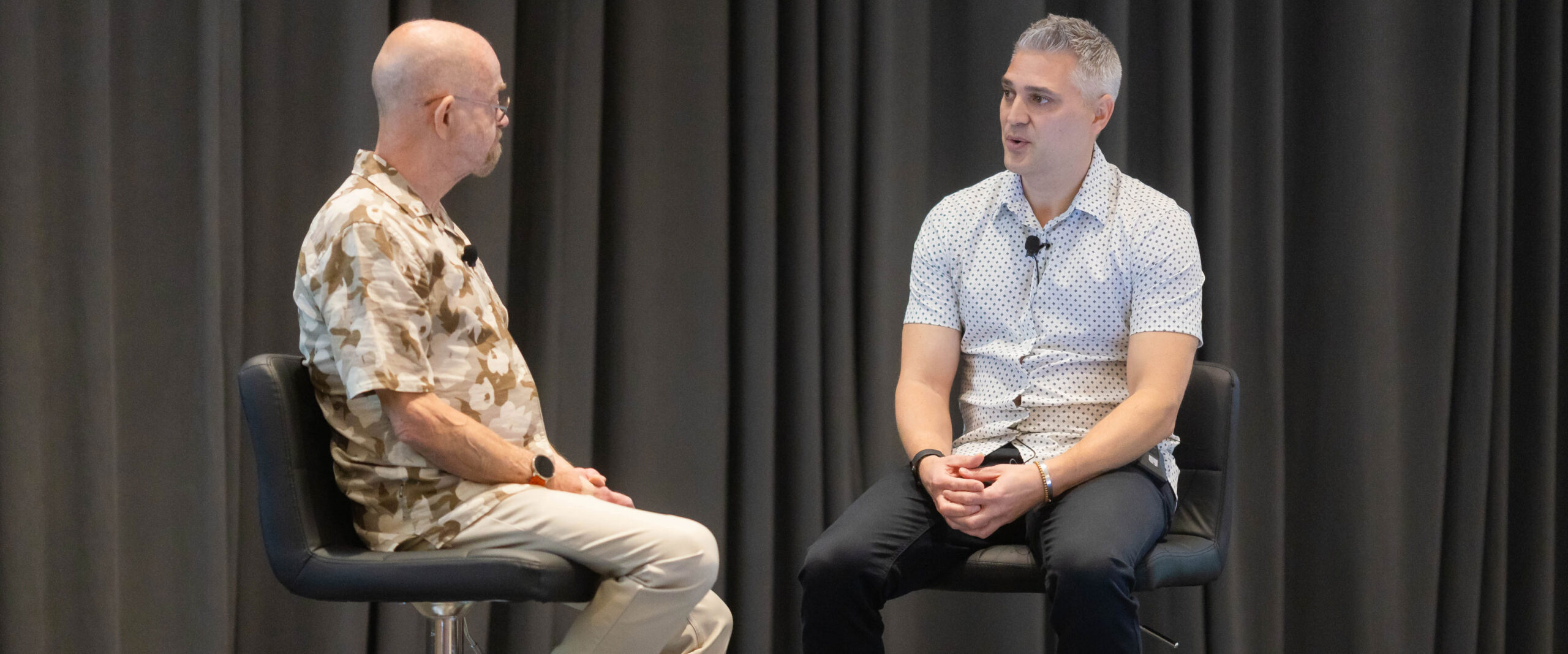
At a recent talk they gave, Korthuis and Stauffer cited promising findings from clinical trials and shared how these once-controversial substances are opening unprecedented neurological pathways to healing, potentially reshaping our understanding of psychiatric care. Here are the highlights from their talk.
Transcript
Dr. Stauffer: I’m going to start with the story of a research participant. So this is a combat veteran, a Navy SEAL, multiple deployments, and has severe treatment-resistant PTSD. And before he took part in our MDMA-assisted group therapy study, he had tried everything. And for this particular person, he said that his most troublesome PTSD symptom was a complete lack of emotional connection to his family. And within a single MDMA dosing session, he described an emotional block over his heart dissolving and completely opening up. He felt immense gratitude for his wife and his young children, and he felt compassion for himself. By the end of the day, he said everything had changed.
OHSU is a leader in psychedelic-assisted therapies, and doctors Todd Korthuis and Chris Stauffer are helping lead the way. These therapies have the potential to transform treatment for mental health conditions, addiction and trauma. At a recent talk they gave, Dr. Korthuis and Dr. Stauffer cite promising findings from clinical trials and share how these once-controversial substances are opening unprecedented neurological pathways to healing, potentially reshaping our understanding of psychiatric care.
Dr. Stauffer: What if there was a place you could go where you could intentionally access life-changing experiences with someone who could support you through the meaning-making process and any challenge that arises? Be pretty cool, right? And so the FDA has designated MDMA-assisted therapy for PTSD as a breakthrough therapy, along with other therapies like psilocybin for depression, LSD for generalized anxiety disorder, and a growing number of other psychedelic compounds for different indications.
Dr. Korthuis: And in 2020, Oregon became the first state in the country to create a legal pathway and a framework for state-regulated psilocybin services.
Dr. Stauffer: So we’re talking about two parallel systems developing at once. On the one hand, we have a federally guided medical model moving toward FDA approval.
Dr. Korthuis: On the other hand, we have a state-guided wellness model that’s expanding access to the general public.
Dr. Stauffer: That sounds complicated.
Dr. Korthuis: It is complicated, and it’s also unprecedented. And OHSU turns out to be working already in both spaces.
Dr. Stauffer: That’s right. We run rigorous clinical trials at OHSU and the Portland VA, and we’re also actively preparing for post-approval implementation of the medical model. So, at my lab, the Social Neuroscience and Psychotherapy Lab, we’ve completed our study of MDMA-assisted group therapy with really positive results. Large effect sizes for the reduction of PTSD. In fact, two thirds of our participants no longer meet criteria for PTSD at the end of the study, and this is a sample who had had treatment-refractory PTSD for on average 17 years.
Dr. Korthuis: At the same time, we’re studying how Oregon’s psilocybin program is rolling out in a wellness model. So, in the first year we’ve been doing this, we’ve enrolled about 400 participants so far, and what we’re learning is that the state program actually appears to be both safe and have some very beneficial effects. In the effectiveness bucket, the change in mental health ratings have been striking. So, 93% of individuals said that they benefited from the experience. 82% said that their goals with seeking services were met, and 60% ranked it as among the most meaningful experiences of their entire lifetime. And even though these clients in the state program are a little bit different from Chris’ clients in the randomized trials of veterans, we’re seeing similar results in terms of substantial decreases in symptoms of depression, anxiety, PTSD, use of alcohol and tobacco and other things they’re trying to quit, and increases in life satisfaction and mental well-being. So, Chris, what happened to your patient?
Dr. Stauffer: So the day after his first of two MDMA dosing sessions, his family came to pick him up from the clinic, and on the way home, they had to pull over on the side of the street because his son got carsick, and the participant found himself rubbing circles on his son’s back to comfort him, and he realized that this is something that he’s never done before, and this little moment was a benchmark for an ongoing deepening relationship with his family. And he was one of the participants who no longer met criteria for PTSD at the end of the study, and his scores actually qualified him for complete remission of PTSD. And we believe this is not just because of a drug, but because he had physical and emotional space to process through childhood trauma, combat trauma that his nervous system had been holding onto for decades.
Dr. Korthuis: So maybe this moment isn’t just about psychedelic medications alone. Maybe it’s about building a container that’s strong enough and big enough to accommodate entirely new pathways to healing that we haven’t seen before.
Discovery
Discovery
Discovery