By Darby Kendall
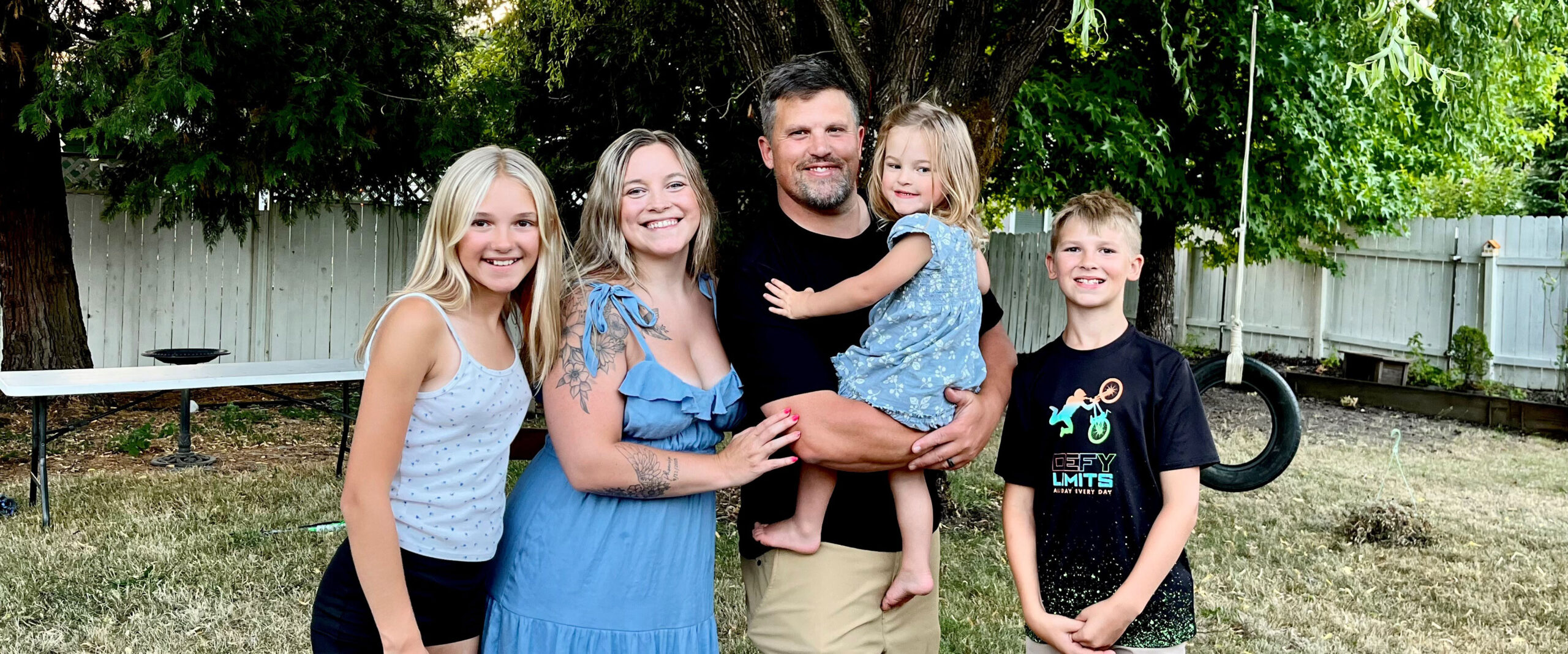
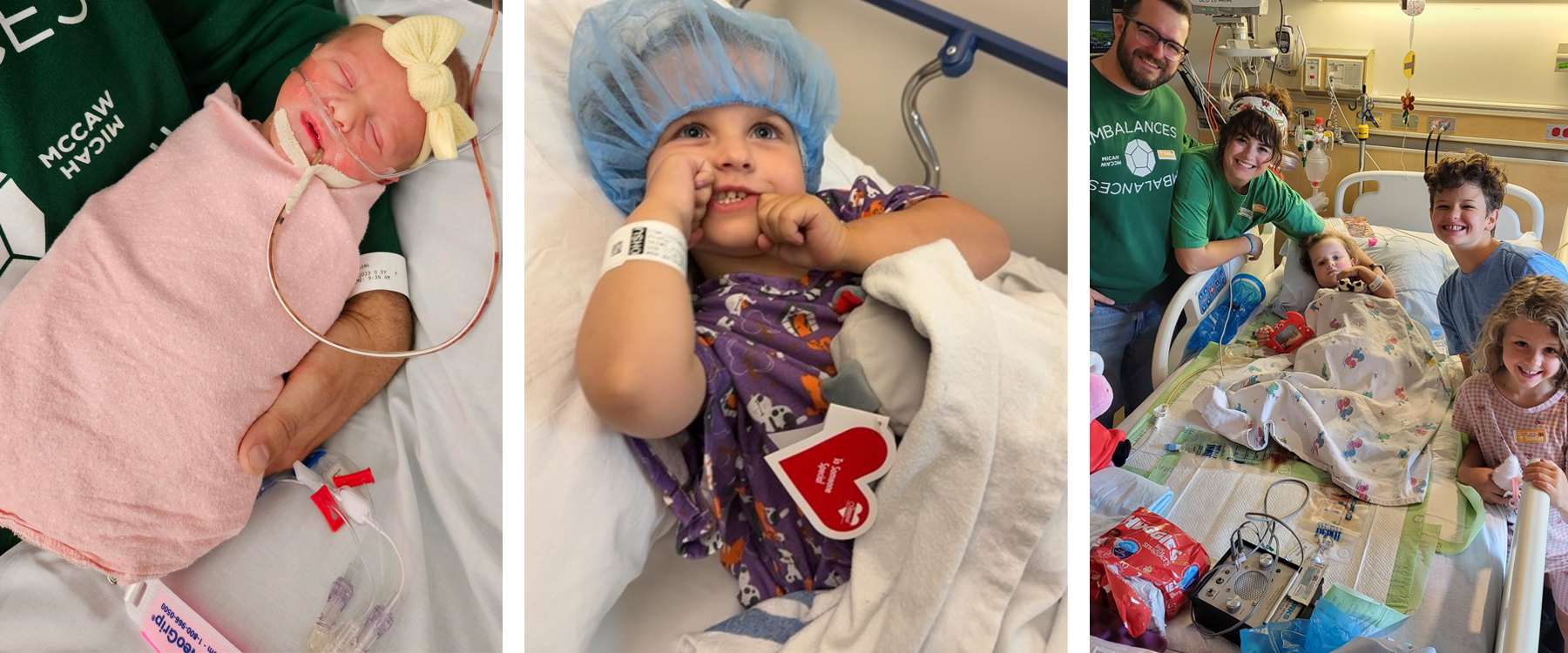
When Oaklee was born at 22.5 weeks, she was so small that all of her fingers fit inside the width of one of her father’s fingernails. Now an active, toddling 3-year-old, Oaklee has flourished after spending the first 5 months of her life in the neonatal intensive care unit (NICU) at OHSU Doernbecher Children’s Hospital.
Oaklee’s journey began in October 2023, when her mother, Heather Merwin, was in her second trimester. Unable to sleep one night, Heather moved from room to room in their home in Roseburg, Oregon, hoping to get comfortable. Eventually, she realized that the cerclage — a stitch her OB-GYN had placed to help keep her cervix closed during pregnancy — had torn, and she was bleeding. From there, things began to move quickly.
“I started contracting badly, and I woke up my husband, Jacob, and said, ‘We need to go to the hospital.’ I couldn’t walk because I was terrified. My contractions were a couple minutes apart at this point. Once we called the ambulance, we were like, ‘I’m pretty sure we’re not going home. This isn’t going to be an easy fix,'” Heather said.
When they arrived at the hospital in Roseburg, Heather was already dilated to four centimeters. Because Oaklee was so early, doctors needed to stabilize Heather before transferring her to a different hospital. After spending four days in Roseburg in the hopes of reaching a more stable state, Heather and her OB-GYN agreed the next best step was to fly to OHSU for delivery, as the Doernbecher NICU was one of the only hospitals in the area to be able to take care of a baby at such a premature age. But getting there presented another challenge.
“They couldn’t get a helicopter to fly out because the weather was bad, and the doctors also said, ‘You can’t take an ambulance either because you’re going to bleed out, and we could lose both of you,'” Heather recalled. “I said, ‘Well, we got this far. What else can we do?’ So, my OB-GYN reached out to the North Bend air traffic control, and they flew up here from Bend in their little airplane and met me at our airport. I got to Portland in their plane and delivered Oaklee at Doernbecher that night.”
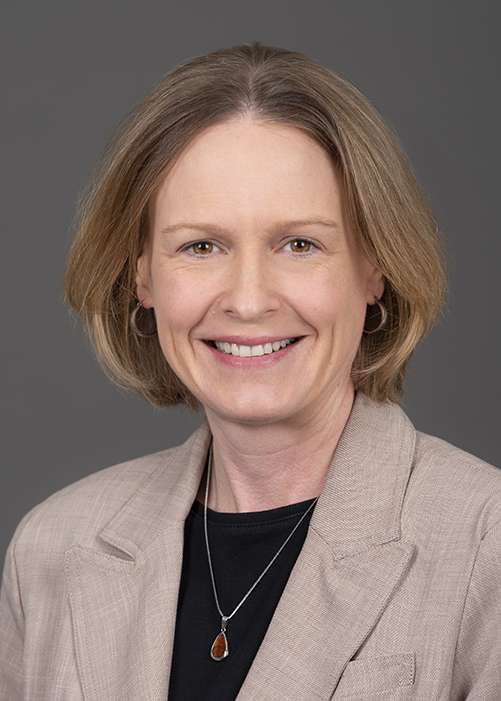
Jamie Warren, M.D., M.P.H., FAAP, professor of pediatrics at the OHSU School of Medicine, was part of the care team who took care of Oaklee after birth and got to follow her after discharge for several weeks. She knew the Merwins had a long road ahead of them after the night Oaklee was born and was ready to help.
“We tell parents that if your baby’s born prematurely, expect to be with us until your due date. So, Oaklee’s parents were looking at roughly 18 weeks of time in the hospital with her,” Warren said. “We see a lot of ups and downs during that time. It’s not easy, but we also see a lot of really cool milestones. If we know them for three or four months, we start to see their little personalities. We love it. We get to know these families, and we get to know these babies.”
During Oaklee’s time in the NICU, Jacob and Heather stayed at the OHSU Rood Family Pavilion. Heather found the long-term stay in Portland difficult because of the distance from her family, but she and Jacob found relief in the community at the pavilion.
“Honestly, one of my strongest memories of staying there was the incredible sense of community we experienced there. The staff were amazing, so thoughtful, encouraging and willing to go above and beyond. They didn’t just make sure my wife and I were comfortable; they made sure Oaklee’s siblings, Ayden and Aaliyah, felt welcomed and had a great experience too,” Jacob said. “During such an incredibly difficult and uncertain time, having a place that felt like a community and a safe haven meant more to our family than I can really put into words.”
In the NICU, Oaklee was given a nasogastric tube to help her eat, and an endotracheal tube to help her breathe. Due to her fragile state, Heather and Jacob weren’t able to hold her at first, but they eventually experienced the precious opportunity for skin-to-skin contact.
“I remember reaching into the incubator and holding her hand. I would just talk to her. I would speak positive things and give her little affirmations. I would sing nursery rhymes and make up little songs,” Jacob said. “I wanted her to find some kind of comfort in hearing me there with her. Even though she was so tiny and couldn’t understand the words, I wanted her to know that she wasn’t alone.”
Throughout the difficult months, the Merwins found comfort in their visits from family, days with Oaklee, and support from the Doernbecher staff. Their friendships with the nurses who cared for Oaklee also gave them peace of mind.
“We bonded with the nurses that we got to know. They were still our nurses, but they were our friends also. This wasn’t just a job for them. They cherished helping these babies that were so helpless,” Heather said. “We were constantly up there for 12-hour days because we didn’t want to miss out on anything that could be important. We just stayed at the hospital for as long as we could without staying the night.”
"During such an incredibly difficult and uncertain time, having a place that felt like a community and a safe haven meant more to our family than I can really put into words."
One crucial part of Oaklee’s progression in the NICU was the removal of her endotracheal tube so she could breathe without assistance. She was moved to a CPAP machine and eventually took breaths all on her own. The next step was getting Oaklee to eat on her own, and thanks to philanthropy, the Merwins were able to take their daughter home early.
“Historically, we’ve always told people that their babies need to eat everything by mouth before they go home, but with a very generous donation from Mark and Debra Madden and the Doernbecher Philanthropy Board, we were able to start a program called Growing @ Home. This means that we can teach families how to use a feeding tube, how to place it if they need to, how to feed their babies, and the babies can go home and finish their hospitalization at home. We are finding that we’re saving about seven days of hospitalization for these kids,” Warren said.
“If you can imagine, as Oaklee came up on her 140th day in the NICU, and she met the criteria for this program, her parents said, ‘Where do we sign and how do we do it? We’re ready to go home.’ And so they did.”
Today, Oaklee is a vibrant, happy child whose development gives little indication of her premature birth.
“She’ll be 3 in October, and she knows all of her colors. I’m doing homeschool preschool with her, and her personality is so funny and spontaneous, and just full of life,” Heather said. “She’s doing really well.”
Jacob sees his daughter’s determination and eagerness every day. “Oaklee has this incredible curiosity about the world. She wants to learn. She wants to try. She wants to figure things out. And there is a determination in her that is hard to explain,” he said. “When I think back to those first days in the NICU, when she was so incredibly fragile and her future was filled with so many unknowns, it’s almost surreal to see who she has become.”
Looking back, the Merwin family remains thankful to everyone who helped Oaklee survive and thrive. Jacob offered words of gratitude to those who played a part in her time at Doernbecher.
“Because of the care Oaklee received, she gets to grow up. So, to every person who played a part in Oaklee’s care — from the doctors and nurses to the therapists, specialists, staff and everyone behind the scenes — I could never properly thank you for what you gave our family. You gave us our daughter.”
Patient Care
Patient Care

Community | Patient Care