


By Josh Friesen
For the second time in three weeks, Victoria and Dylan Deems were absorbing life-changing news.
Victoria, who was 20 weeks pregnant, had just had an ultrasound at OHSU Doernbecher Children’s Hospital. Three weeks prior, she and her husband, who live in Medford, Oregon, were told by a local provider that their baby had limb-body wall, a severe, rare and fatal fetal malformation syndrome.
“They basically said that there was pretty much no way that our baby would survive,” Dylan recalled.
But they wanted to be sure, so they drove five hours up to Doernbecher for a second opinion. The result? It wasn’t limb-body wall. It was a similar, non-fatal condition called OEIS, which is also rare.
“It just felt like whiplash,” Victoria said. “To go from this other, fatal diagnosis, to, ‘No, your baby might live,’ was just the best news ever. It really did feel like a miracle.”
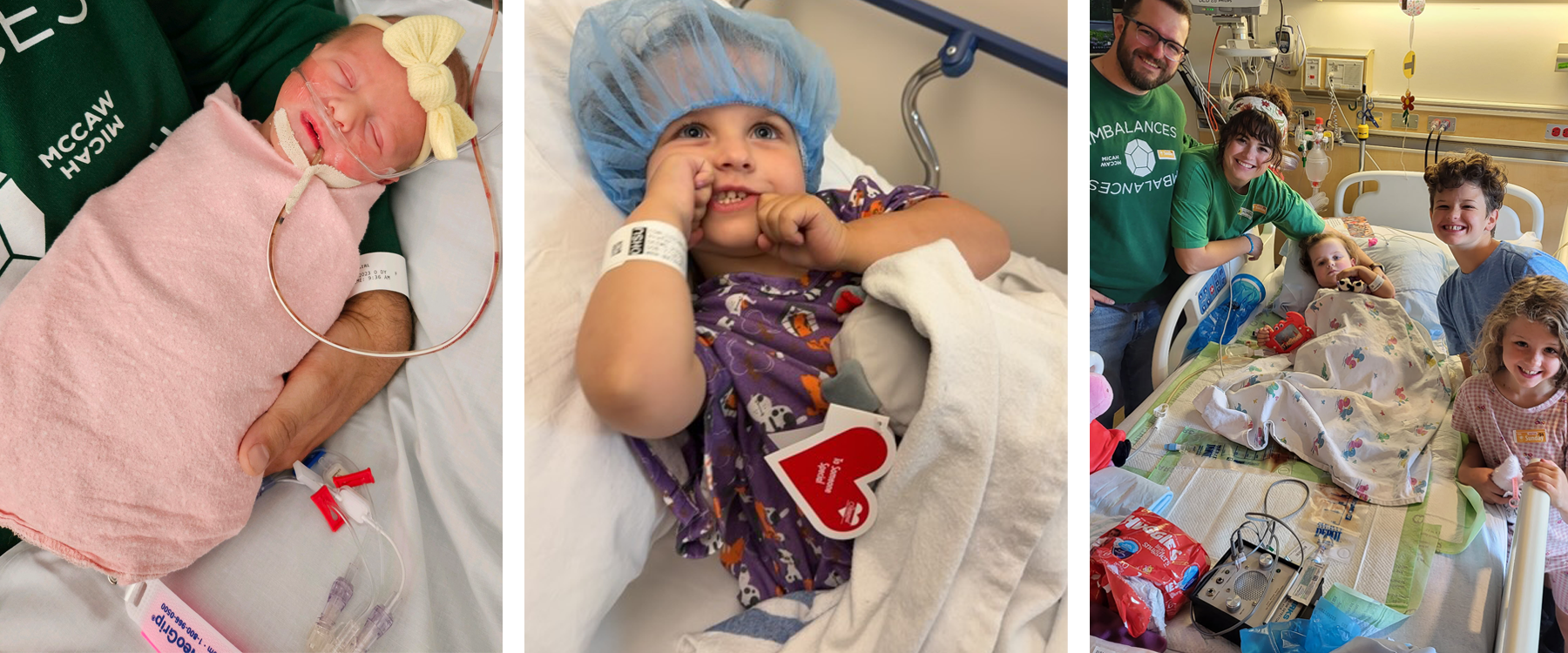
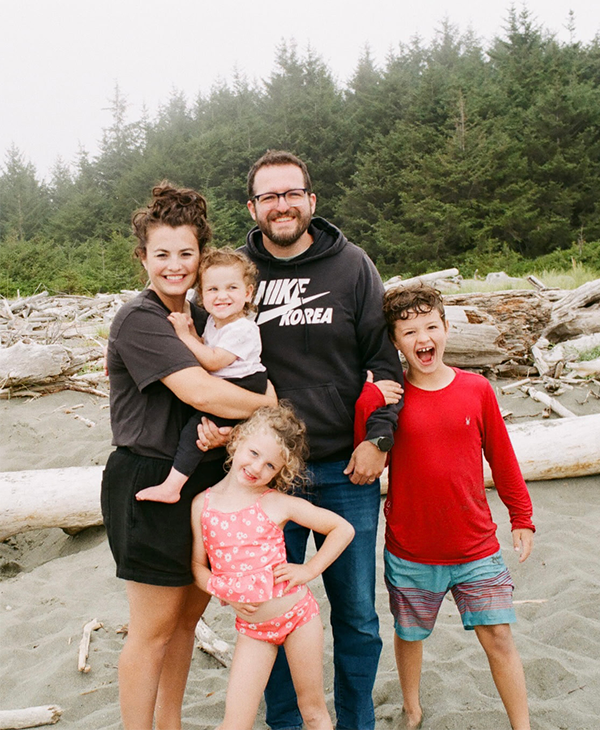
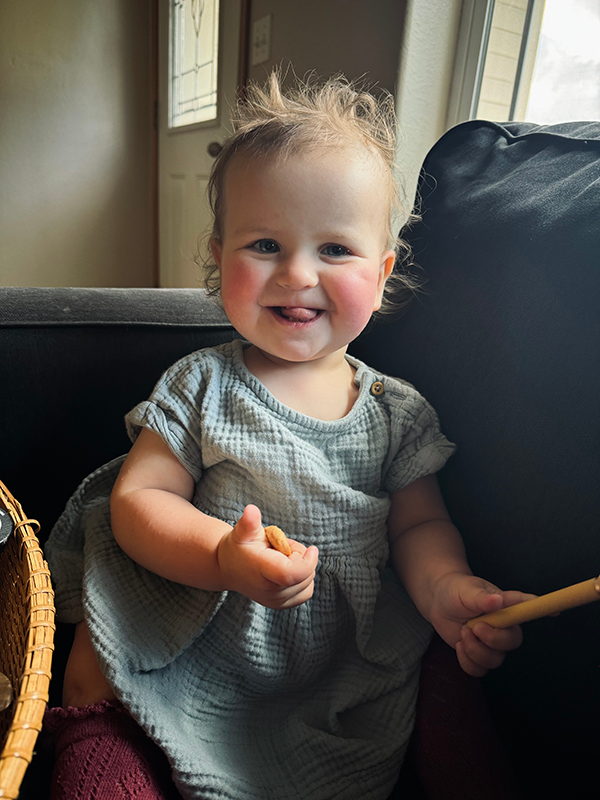
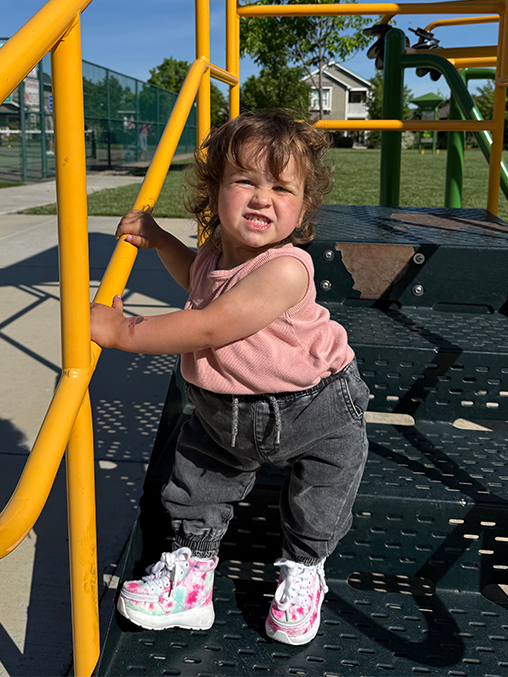
The seed of trust was planted. Victoria and Dylan’s daughter, Violet, was born just over 17 weeks later at Doernbecher. Today, Violet is 3 years old. She’s reserved around people she doesn’t know but showcases her goofiness as she gets comfortable. She loves taking family walks and is always trying to keep up with her two older siblings.
She’s also stunningly aware and inquisitive — traits Victoria and Dylan attribute to her long health journey at Doernbecher that included a C-section birth, a NICU stay, and countless discussions, appointments and surgeries involving urology, neurology, orthopedics, maternal-fetal medicine, plastic surgery, nephrology, endocrinology and nutrition.
The Deems feel comfortable at Doernbecher, a sense of well-being rooted in trust that goes all the way back to their initial appointment when Violet was diagnosed with OEIS.
“We believed they were doing everything they could to make her better,” Dylan said. “We had to just trust the process.”
“We’ve heard, ‘I’ll be honest with you, I’ve never seen this before,’ a dozen times,” Victoria said. “You just have to trust them. They’re so brilliant. They’re going to figure it out.”
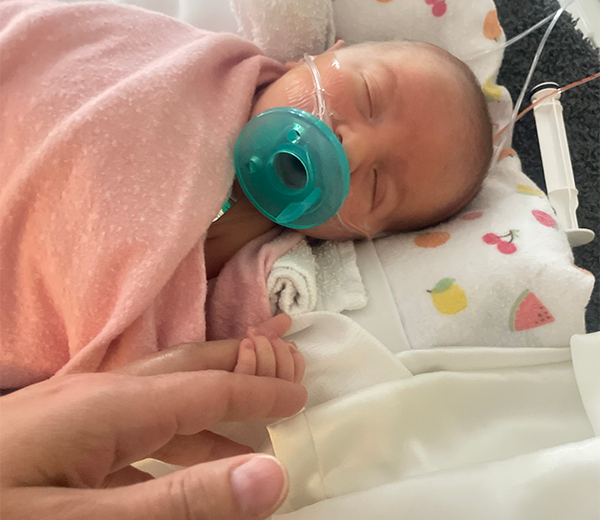
“It has been hard. But hard isn’t the same as bad. All the doctors at Doernbecher support us; we don’t do it alone.”
Victoria Deems
OEIS is incredibly complex, and no two cases are exactly the same. The condition, also known as cloacal exstrophy, is defined by a combination of complex birth defects that severely impact the abdominal organs, the bladder, the intestines and the spine. Where one instance might involve organs pushing through a hole in the abdomen, another instance might involve a colon that is split in half.
Before Violet was born, Doernbecher’s specialists gleaned as much as they could about how her specific condition presented from prenatal ultrasounds, MRIs and echocardiograms.
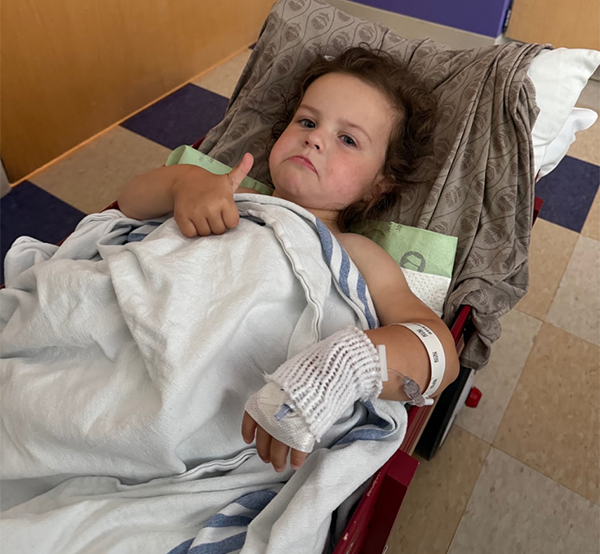
“And then at some point, it was like, ‘Alright, now we’ll just see what she’s like when she’s born because we can’t see anything else,’” Victoria said.
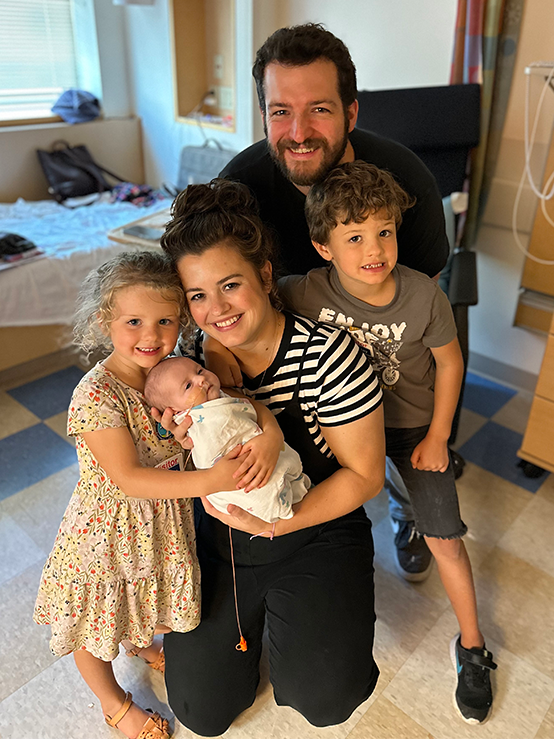
Violet was born at 37 weeks, three days — about a week after the Deems family began staying at the South Waterfront Ronald McDonald House in the OHSU Rood Family Pavilion. The various care teams had done everything they could up to that point to unearth pieces of Violet’s OEIS puzzle. When she was born, they were able to find the rest.
It was time to put the puzzle together. Victoria and Dylan trusted Doernbecher to do it.
“I really like to be informed, and so I had spent a lot of time learning about Violet’s complications,” Dylan said. “But all the information I could gather to try and help make good decisions, I realized pretty early on how little context I actually had to make a good decision, that her doctors were bringing all the same information and more to make a decision that would be a good outcome.”
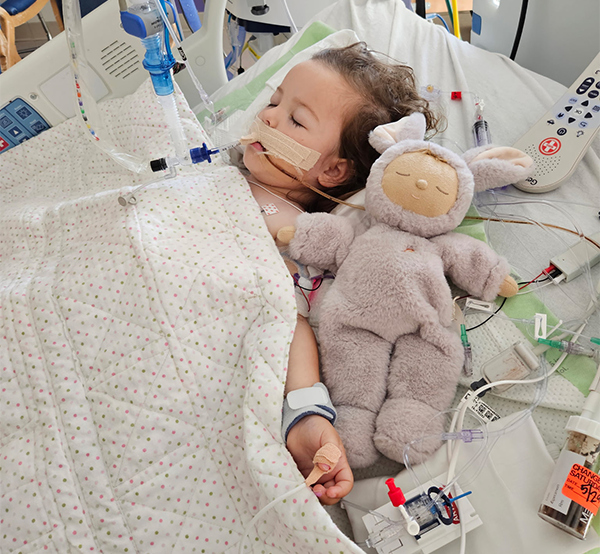
Violet has gone through a lot between then and now. Early on, she kept losing weight despite significant food intake. After a weeks-long stay at Doernbecher trying to find the cause, the pediatric nephrology team discovered that because Violet’s large and small intestines weren’t connected, she wasn’t absorbing sodium, which was preventing her from gaining weight.
Before Violet was six months old, she’d had Achilles tendon release surgery and serial casting to correct clubfoot, emergency intestine surgery for a prolapsed small intestine, and spinal surgery to repair a tethered cord due to spina bifida. At 18 months, she had three separate surgeries to repair her omphalocele, a distinguishing factor of OEIS in which one or more abdominal organs protrude through the belly button.
Her most recent series of surgeries for her bladder exstrophy — a condition where the bladder is formed outside the body and is turned inside out — was the biggest. Over a six-week period, pediatric surgeons from urology, orthopedics and plastic surgery performed six surgeries to reconstruct her pelvis and bladder. The most intensive of the six surgeries took over 12 hours.
“We’ve been through a lot at this point where it does feel a little more like our way of life,” Dylan said. “It’s still hard every time, but we trust the team. Surgery is scary, but she’s in the best hands possible.”
Violet will need more surgeries as she grows, though Victoria and Dylan believe the most significant one is behind her. Despite the arduous road so far and the hurdles on the horizon, the Deems are confident their daughter’s care teams at Doernbecher will continue to guide them through.
“It has been hard. But hard isn’t the same as bad,” Victoria said. “All the doctors at Doernbecher support us; we don’t do it alone. Even if it seems impossible, we can do it.”

Community | Patient Care
Celebrating a century of children's health
For 100 years, OHSU Doernbecher Children's Hospital has transformed children's health and well-being.
Patient Care
Foresight, calm and empathy impact family’s birth story and NICU stay at OHSU
Ricki and Nick Schoepp are grateful for the care they received as they navigated their son Zack's premature birth and NICU stay at OHSU.
Patient Care
The focus of fetal care
Here are some highlights of leaders and experts from Doernbecher speaking on the integrative medicine across the children’s hospital.