


By Josh Friesen
As Ricki Schoepp entered the home stretch of her pregnancy, she and her husband, Nick, had no reason to think anything was wrong.
Neither did Ricki’s OB/GYN, Jamie Lo, M.D., MCR, associate professor of obstetrics and gynecology in the OHSU School of Medicine. The only slight blip in an otherwise healthy pregnancy was Ricki’s baby being slightly smaller than average midway through the third trimester. Though it was nothing to be too alarmed about, Lo scheduled an extra appointment just to be safe.
At the appointment, Ricki and Nick’s baby was diagnosed with fetal growth restriction at 34 weeks of gestation. Today, Ricki and Nick look back on just how significant that extra appointment was.
“Dr. Lo made it sound like she just had a feeling,” Ricki said. “We don’t know what would’ve happened if she wasn’t on our team.”
“I truly believe that if Jamie doesn’t have that foresight, we might not have our son Zack today,” Nick said.
“Everybody — from the front desk to the providers to the nurses — was just incredibly pleasant, nice, understanding and empathetic to our situation. It was a phenomenal experience.”
Ricki Schoepp
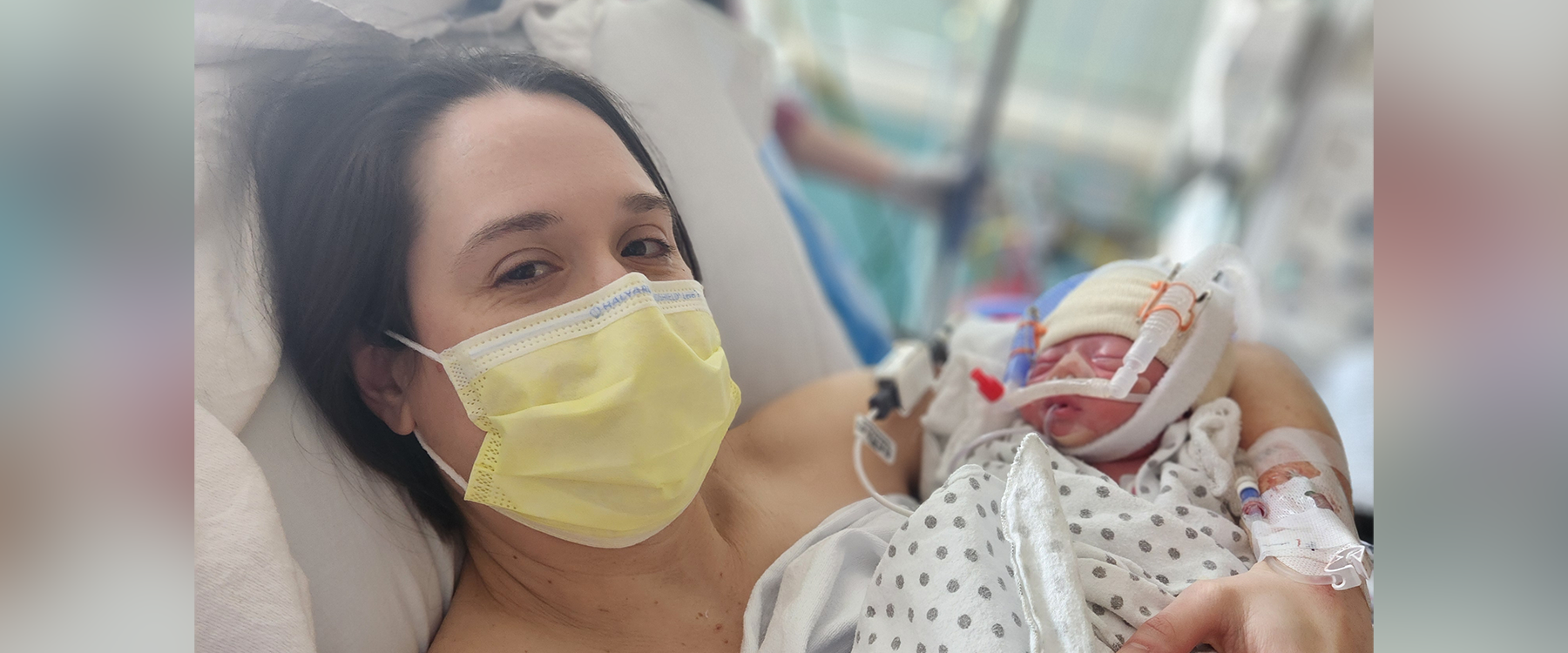
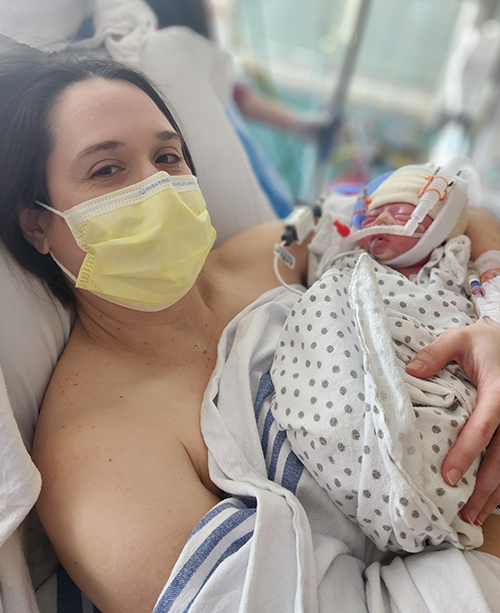
After the diagnosis, Ricki had fetal monitoring and ultrasounds at OHSU twice a week. At her 36-week appointment, her care team saw her baby’s oxygen levels drastically decelerate. She was rushed up to labor and delivery, where further monitoring confirmed the need for an emergency cesarean section.
“A nurse put her hand on my knee and was like, ‘You’re going to have a baby today,’” Ricki said. “Obviously, I was super scared. The demeanors of the nurses, though, were calm. They kept telling me, ‘We’ve got you. Everything’s going to be fine.’ There was urgency, but it wasn’t frantic. That calm helped me.”
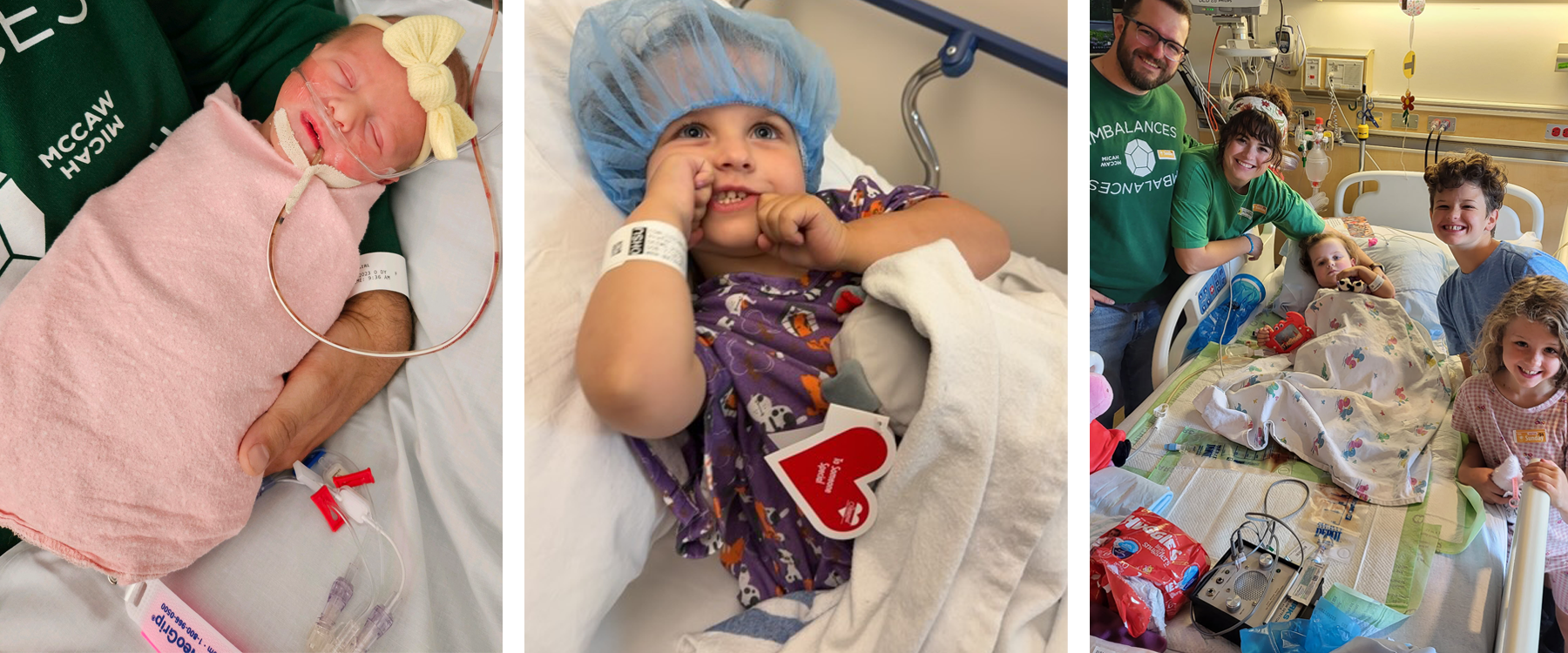
A short time later, Ricki and Nick’s son, Zack, was born via cesarean section. His Apgar score, which assesses a newborn’s health immediately after birth, was a 5 out of 10. At 4 pounds, 3 ounces, Zack was underweight and wasn’t getting enough oxygen. He was transferred to OHSU Doernbecher Children’s Hospital’s NICU, where he stayed for 12 days.
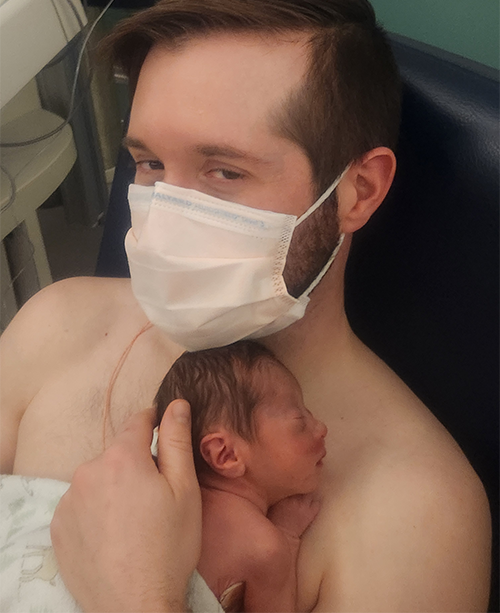
Little by little, Zack gained weight. His lungs began breathing on their own. His body temperature self-regulated. When Emily Carter, M.D., M.P.H., assistant professor of pediatrics in the OHSU School of Medicine, let the Schoepps know they could go home, they were ecstatic.
Despite everything — a stressful diagnosis, a premature birth and nearly two weeks in the NICU — Ricki and Nick look back on their experience at OHSU fondly. The totality of their care from the first prenatal appointment all the way up to being discharged from the NICU with their new baby leaves them feeling incredibly grateful.
“Everybody — from the front desk to the providers to the nurses — was just incredibly pleasant, nice, understanding and empathetic to our situation.” Ricki said. “It was a phenomenal experience.”
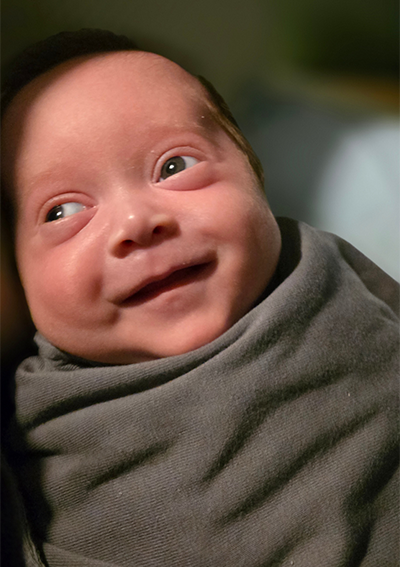
Today, Zack is at home, thriving and checking off infant milestones. He babbles often, is easy to make laugh and recently discovered his penchant for rolling over. Ricki and Nick are already looking forward to adding to their family, and the care they received at OHSU is a big reason why.
“We’re very fortunate OHSU was able to help us and be a part of our journey,” Ricki said.
Patient Care
Patient Care

Community | Patient Care