

By Josh Friesen

Watching a child grasp a toy for the first time is a highlight for any parent.
But for Ellie Morris, the moment carried even more meaning. It meant her infant son, Silas, could see.
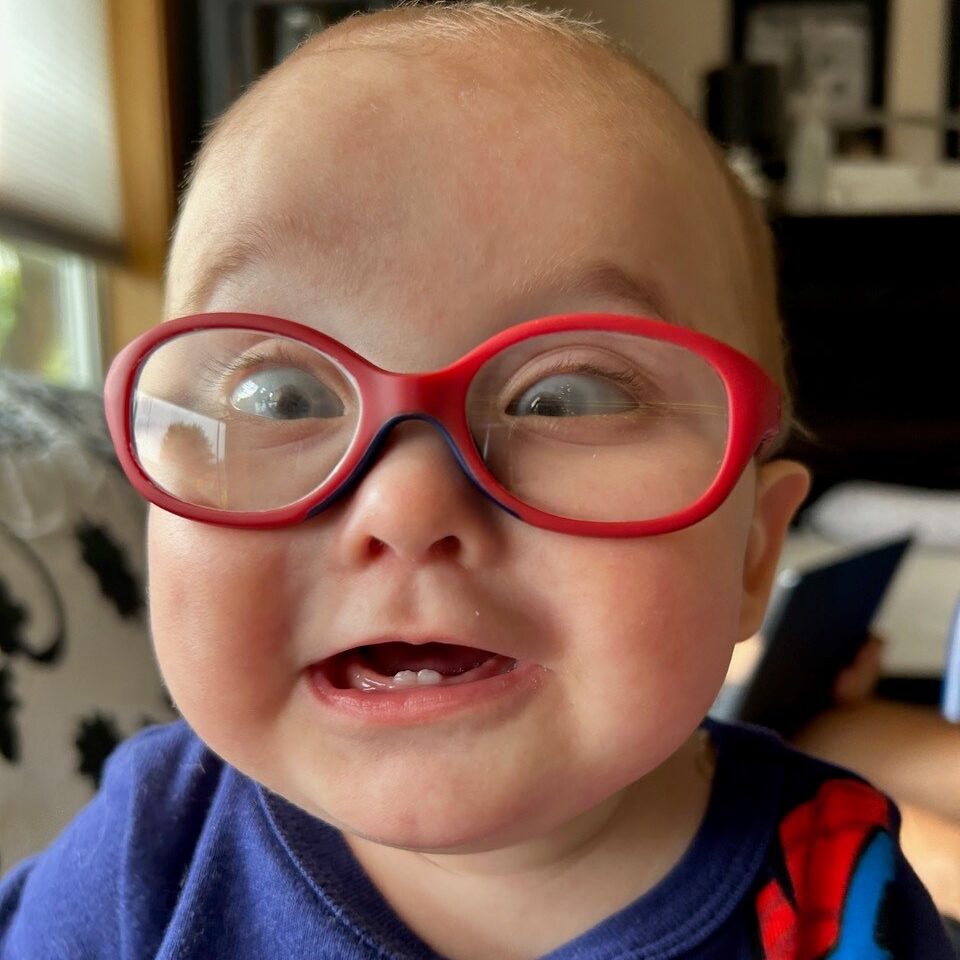
“I’ll never forget it,” she said. “I laid him down on his playmat that has all these toys hanging from it, but he never really knew they were there because he couldn’t see them. I saw him look up in a different direction for the first time — like he could see something different — and he intentionally reached out to grab a little Nemo toy fish that was hanging down.”
Overwhelmed with surprise and joy, Morris improvised some rough tests to confirm what she hoped was true. She set different toys out of reach in front of Silas. Sure enough, he perceived them and reached out. She took toys from his hand and watched as he tracked their movements and picked them up again.
She looked into her child’s eyes.
And he looked back.
After being told when Silas was born that he would always be blind, Morris saw he now had sight. The OHSU Casey Eye Institute had made something she’d once thought impossible, possible.
“It’s literally a miracle what these doctors at Casey Eye were able to make happen,” Morris said.
“Silas’ story is so inspiring and exemplifies the Casey Eye Institute’s continued dedication to discovering innovative, novel ways to give sight to patients like him,” said Andreas Lauer, M.D., director of the Casey Eye Institute and Margaret Thiele Petti and August Petti Chair of Ophthalmology. “I am proud every day of the work we do, the people we have, the care we provide and the patients we impact, and I am grateful for how private philanthropy enables us to push the boundaries of what is possible in vision science and ophthalmology.”
“The Casey Eye Institute and OHSU feel like a whole different group of individuals and staff that were so passionate. They gave our family so much hope and connected to us on a pretty personal level.”
Ellie Morris
A rare blindness
Silas was born Dec. 12, 2023, in Spokane, Washington, where Morris and her family reside. Morris could tell right after he was born that something was off about his eyes.
“They were very, very opaque,” she said. “None of the doctors or nurses had ever seen anything like it. Immediately, he was rushed to the NICU.”
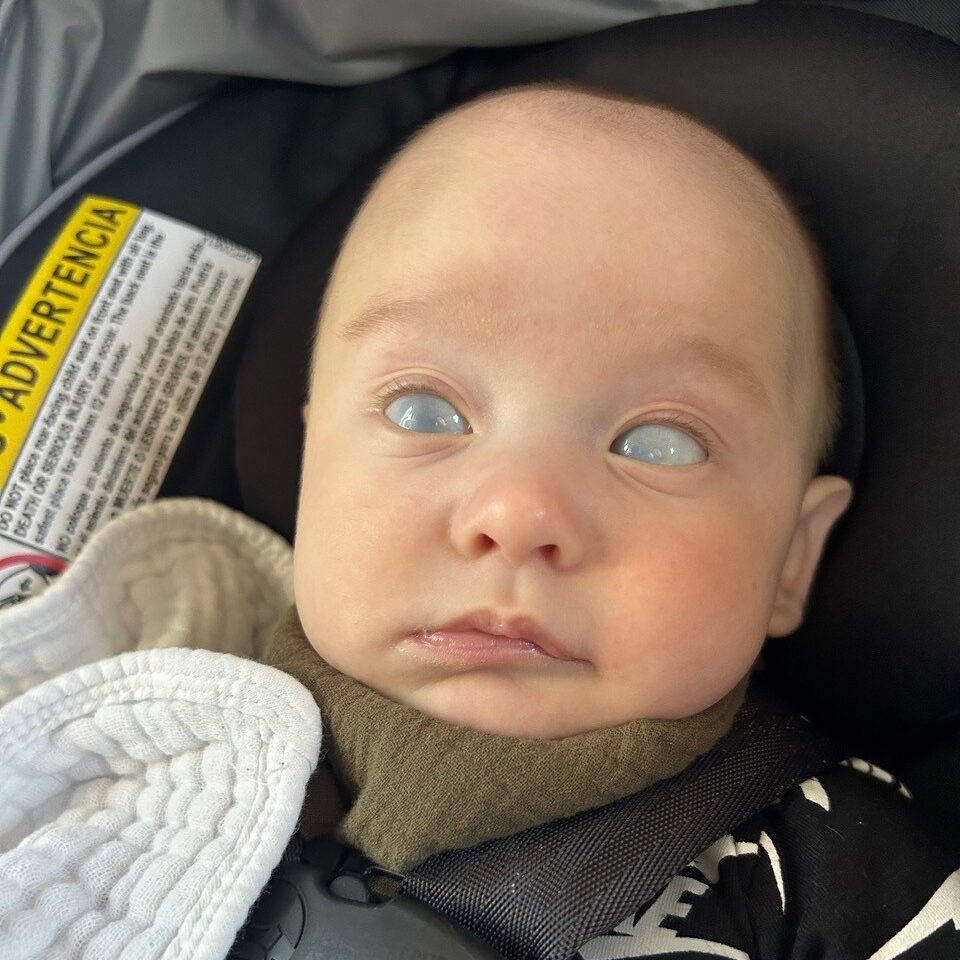
Specialists were summoned to exam Silas’ eyes, and eventually, he was diagnosed with bilateral sclerocornea, an extremely rare congenital eye condition in which the cornea — the thin, transparent, protective layer that envelops the front side of the eyeball — is cloudy instead of clear.
Morris’ specialists in Spokane had never encountered bilateral sclerocornea before and advised Morris on how to care for a blind child. A second opinion, however, directed her toward Portland and the Casey Eye Institute. When Morris brought Silas to see the institute’s expert cornea team in February of 2024, she immediately knew she’d made the right decision.
“The Casey Eye Institute and OHSU feel like a whole different group of individuals and staff that were so passionate,” she said. “They gave our family so much hope and connected to us on a pretty personal level.”
Silas’ care team saw that despite the bilateral sclerocornea, his optic nerve and retinas were perfectly fine. They suggested full-thickness corneal transplants on both eyes. A month after that initial appointment, Silas was back at the Casey Eye Institute undergoing the procedure. But because Silas’ condition is so rare, they couldn’t be certain the treatment would work.
Until Silas reached out for the toy.
“Everything just kind of fell into place,” Morris said. “We have this great team that we’ve made connections with that were just there to support us with whatever decision we were making to help best benefit Silas and his wellbeing.”
The gift of sight
As Silas grows, so, too will his eyes. His body will eventually reject his new corneas, and he’ll need to continue receiving corneal transplants in the future.
So far, he has had three corneal transplant surgeries at the Casey Eye Institute. His most recent transplant was this August. The transplant prior lasted about a year, which was the best-case scenario.
“It’s been a great success,” Morris said. “We’ve just been blown away by everything the team has done. After the first transplant, he had the most clear cornea and they were able to see all the way to the back of his eye.
“I can’t really put into words how much the Casey Eye Institute means to us and to Silas. It’s the one medical place Silas can go and not start crying immediately. I really do think that’s because of all the staff and how well they connect and make sure he’s comfortable.”
The older Silas gets, the fewer transplants he’ll need. Morris is hopeful the next one will be able to last up to five years. Silas’ care team is hopeful he’ll go on to have relatively clear vision with little to no issues.
“Things are just going to keep getting better for Silas,” Morris said. “The Casey Eye Institute at OHSU just really helped give us hope. The thing that sticks out to me is how passionate and hands-on everyone we’ve interacted with is. Everyone is so invested. The work they do just really tells us that this is going to work out.”
Patient Care
Patient Care
Community | Patient Care