


Explain It! is a video series that spotlights the fascinating and impactful research taking place at OHSU.

By Josh Friesen
What would a world free of HIV look like?
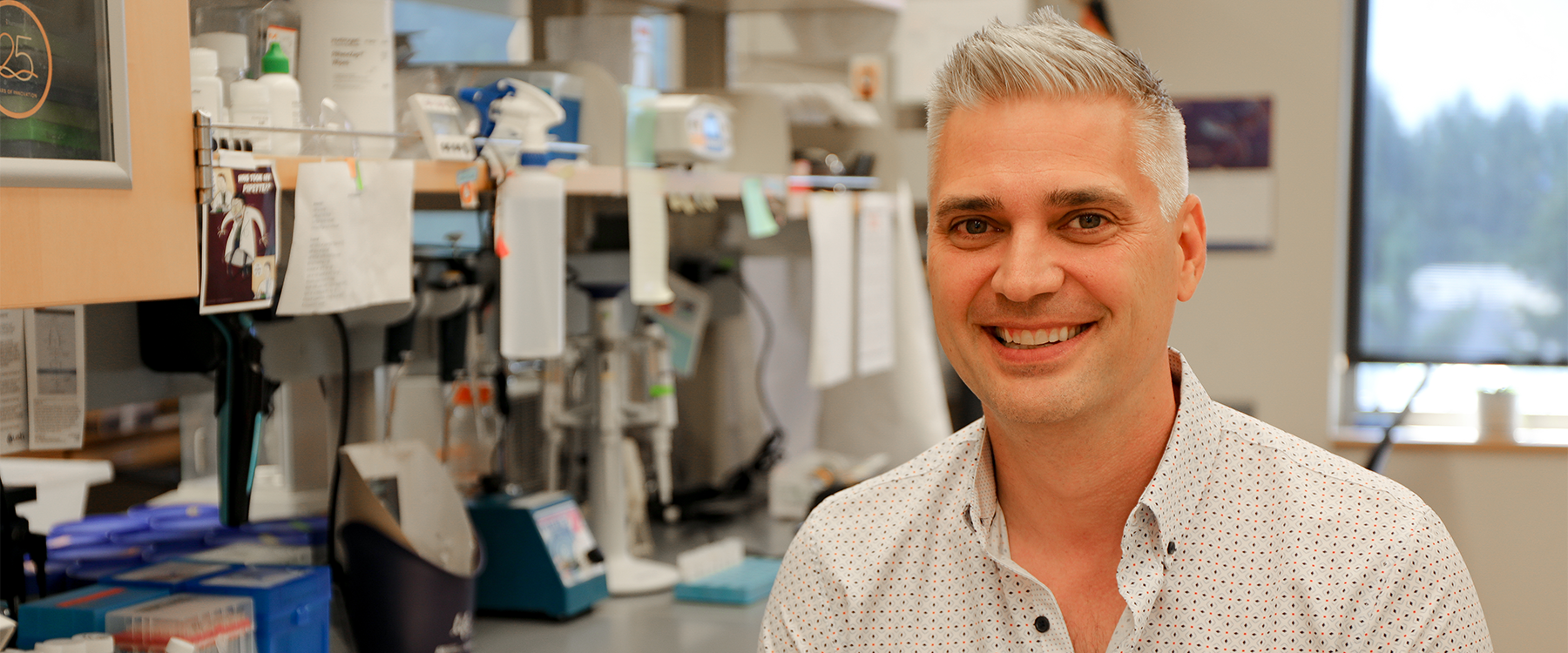
Jonah Sacha, Ph.D., a professor of pathobiology and immunology in the OHSU VGTI-Vaccine and Gene Therapy Institute, believes we’re close to finding out.
“I firmly believe we’re going to cure HIV in our lifetimes,” Sacha said. “And I think OHSU is going to play a major role in that.”
HIV remains a global public health crisis. More people are HIV positive now than at any other time in history — approximately 40 million worldwide. While antiretroviral therapies have become powerful enough to manage the disease, it continues to kill more than 600,000 people every year.

For decades, it was thought HIV could only be treated — never cured. That notion was turned upside down in 2007 when Timothy Ray Brown, known now as the “Berlin Patient,” became the first person cured of HIV. He was cured not by a drug designed for HIV, but by a stem cell transplant meant to treat leukemia. Since then, 10 others have been similarly cured of HIV. Scientists set out to figure out the underlying mechanisms behind why.
Sacha is one of the researchers leading the search for the answer. He and his collaborator, Lishomwa Ndhlovu, M.D., Ph.D., of Weill Cornell, are co-principal investigators on an NIH-funded research project that gathers three of the individuals cured of HIV to study exactly how each of them was cleared of the virus. Once they uncover the molecular mechanisms behind how the three individuals were cured, Sacha and his team will endeavor to replicate the process.

“It’s a really exciting time for HIV care. It’s exciting because we have the answer here. We can define how HIV is cured. … We’re at the precipice now of being able to cure HIV.”
Jonah Sacha, Ph.D.
Sacha has already begun collaborating with hematologist-oncologist Richard Maziarz, M.D., a professor of medicine in the OHSU School of Medicine who specializes in blood and marrow transplantation and immunotherapy, to develop a model from which the clinical trial protocol will be built.
“It’s a really exciting time for HIV care,” Sacha said. “It’s exciting because we have the answer here. We can define how HIV is cured, and we can use that to develop the next generation of cell and gene therapy approaches to cure more people. We’re at the precipice now of being able to cure HIV.”
Discovery
Discovery
Discovery