


By Darby Kendall
For Ignite Magazine
Unprecedented.
That is one way to describe the current state of research in the United States.
“I’ve never seen anything like this before in my career, and I’ve been doing this for over 20 years,” said Bonnie Nagel, Ph.D., OHSU interim chief research officer and director of the OHSU Steven J. Sharp Center for Mental Health Innovation. “I’ve certainly seen ebbs and flows in funding and institutional priorities shift; that’s common. But there’s been nothing like this.”
During the COVID-19 pandemic, research funding underwent serious financial strain that shifted the allocation and availability of money. The pandemic halted most research unrelated to COVID-19, and the field has been recovering ever since.
Now, recently proposed federal policy changes and budget cuts could impact OHSU’s federal funding for research. Academic health centers like OHSU rely on a variety of external sources to fund research, the largest being the federal agency National Institutes of Health (NIH). Starting earlier this year, grants from the NIH have continually switched between being cut and restored to OHSU, causing severe uncertainty amongst scientists.
“There have been delays in receiving funding, which have resulted in both scientific and personnel challenges here,” Nagel said. “People having to be told they’re being let go and then being reinstated. It’s been a really challenging environment.”
Despite the difficulties scientists face today, OHSU — equipped with a collaborative spirit and philanthropic support — is poised to preserve the research that promises a healthier tomorrow.
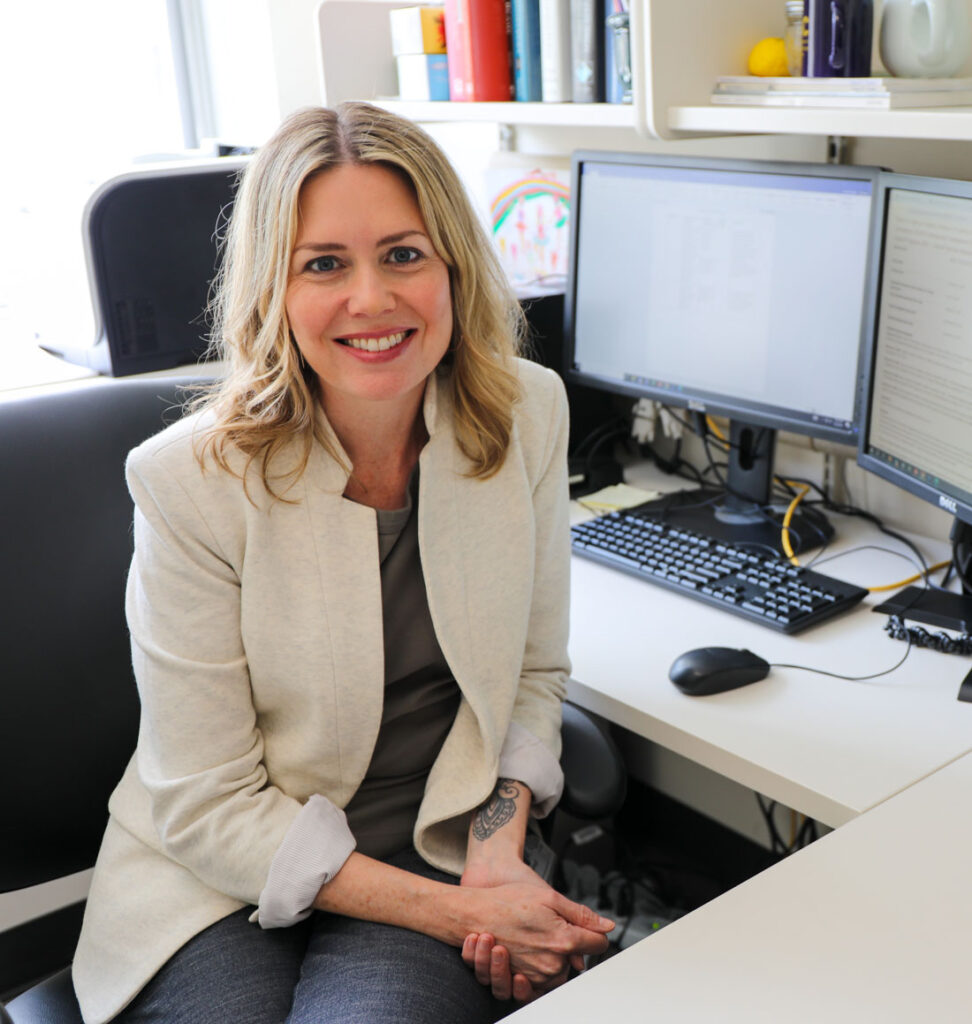
“The beauty of science is you’re always on the precipice of something new. You don’t necessarily know how impactful that new thing is going to be until it’s tested, but it could be the next transformative cure.”
– Bonnie Nagel, Ph.D.
Research saves lives
Research has benefited humanity since we developed the capacity to discover, and it is the origin of every lifesaving breakthrough, every medical advancement, every new cure, treatment and therapy. Medical innovations made by our ancestors still positively impact our lives today. We have research to thank for antibiotics, vaccines, x-rays, the electricity in our homes and the eyeglasses so many use to see.
At OHSU specifically, researchers have developed historic disease treatments, medical tools, therapies and cures, such as the world’s first successful heart valve replacement surgery in 1960 using the Starr-Edwards heart valve, invented at the then-University of Oregon Medical School. In 1998, the first clinical trial for the targeted cancer therapy drug Gleevec, led by Brian Druker, M.D., turned chronic myeloid leukemia from a deadly disease into a treatable condition managed by a daily pill. In 2013, brain specialists helped develop responsive neurostimulation, an implantable brain device that can prevent or even stop seizures in epilepsy patients. And earlier this year, a new blood test was developed at OHSU to identify hard-to-detect pancreatic cancer with 85% accuracy, potentially improving survival rates for one of the deadliest cancers.
The last 25 years in particular have witnessed extraordinary growth in the research space, opening doors to exciting new health care possibilities. OHSU has flourished in this era of opportunity, investing in the expertise and scientific infrastructure required to conduct leading-edge research. OHSU’s thousands of ongoing research projects translate into a new discovery or invention approximately every three days.
As an academic health center, OHSU’s research spans everything from basic science, which studies the structure and function of molecules, genes and cells and observes how they all work together, to translational research, which evolves basic research findings into meaningful treatments and clinical application, to population research and community health, which scales treatments and works to make them accessible to everyone.
“Research really runs the whole gamut,” Nagel said. “It’s not just about disease; it’s also about health.”
The lifeblood of research
OHSU relies on funding from the NIH to complete research projects — in fiscal year 2024, backing from the NIH made up 60% of OHSU’s research funding. These grants often fund training and career development, research infrastructure and supplemental funds to expand existing projects. Current proposals would significantly reduce how much funding OHSU receives from the NIH. If enacted, these cuts would pose a significant threat to OHSU’s research mission.
With so much uncertainty surrounding federal funding, philanthropy has an opportunity to support biomedical research in exciting, innovative ways.
“Philanthropy allows us a bit of calm in the storm to keep doing the good work,” Nagel said. “When we have donors that are invested in the work that we’re doing without threat of changing priorities or pulling funding, it allows for stabilization. That’s critical for some of these studies to keep making progress. There are certain projects where if funding is lost, progress can be lost very rapidly. There’s no way to sustain the work otherwise, so philanthropy plays a critical role.”
Private support does far more than stabilize the current uncertain terrain of the research enterprise. Philanthropy has always gone where national grants will not, backing the boldest of ideas. Higher-risk concepts often unlock bigger breakthroughs, as the nature of scientific experimentation is diving into the unknown.
“The beauty of science is you’re always on the precipice of something new. You don’t necessarily know how impactful that new thing is going to be until it’s tested, but it could be the next transformative cure,” Nagel reflected.
Historically, the NIH offers grants to those who can already prove that their work will have tangible benefits. This limits the federal support given to scientists who want to try something new, which is where philanthropy comes into play. It gives researchers the freedom to be curious and to prove their concepts enough for an agency like the NIH to then also invest in their research.
“It’s important to have philanthropy as another source of support for individuals who are interested in really pushing the envelope, in trying to figure out science that’s difficult, complicated or risky,” said Eric Gouaux, Ph.D., senior scientist at the OHSU Vollum Institute. “With philanthropic support, one can go out on a limb and do the kind of important science and work that makes lasting impact.”
More practically, private investments allow OHSU to recruit and retain exceptional faculty, staff and graduate students. Donors who endow faculty chairs or professorships create permanent support for salaries and research costs. Philanthropy also advances research by supporting state-of-the-art laboratory equipment, providing seed funding for innovative early-stage projects and funding scholarships for graduate students.
Powerful research projects
Nagel’s own work has benefited from the investment of private philanthropy. The OHSU Center for Mental Health Innovation, where she serves as director, was established with funding from a $12.5 million gift from the Abracadabra Foundation of Steven and Patricia Sharp. The support allows Nagel and her team to pursue pathways of research not typically supported by traditional funding sources, fostering creativity in trying new solutions. Gift dollars go far at the center, as researchers use them to leverage bigger grants from federal and other agencies — for every million dollars in philanthropy given to the OHSU Center for Mental Health Innovation, their team has generated at least $3 million in federal funding.
At the center, Nagel uses machine learning to study youth mental health in an effort to improve clinical predictions for a variety of mental health conditions, including ADHD, anxiety, depression and substance use disorder. The center’s computational models may ultimately provide clinicians with more effective mental health intervention and prevention efforts.
“The mission of the center is to advance scientific discoveries in mental health and rapidly translate those into real-world practices,” Nagel said. “It’s tremendously exciting to be taking that next step of bringing together science and clinical care. It represents a new frontier in how we approach mental health.”
Another field OHSU furthers is neuroscience, spearheaded by the OHSU Vollum Institute. The institute is dedicated to basic research that leads to new treatments for neurological and psychiatric diseases, and Gouaux heads a lab at Vollum that constantly adds to that progress.
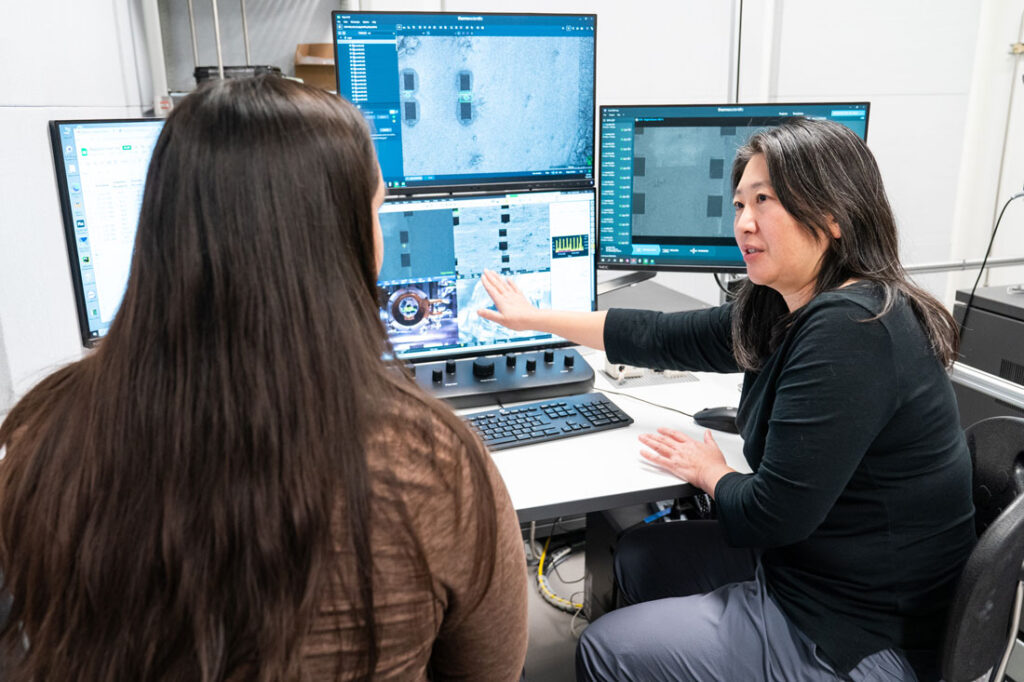
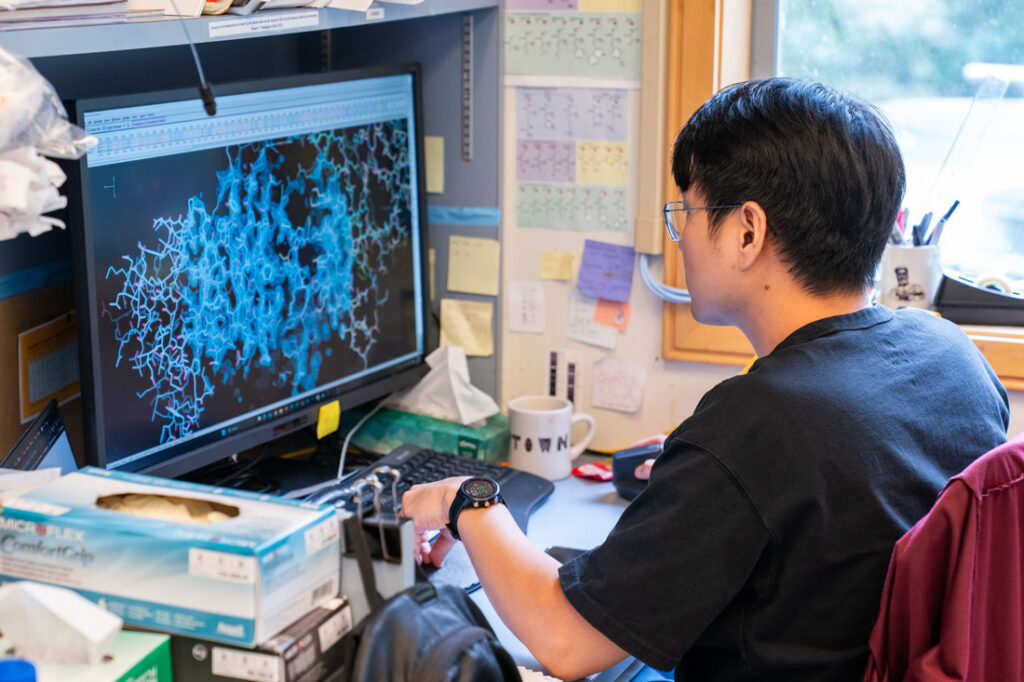
Gouaux studies how the brain processes information on a molecular level. Earlier this year, Gouaux and fellow OHSU scientists used cryo-electron microscopy to discover the structure of glutamate receptors, which are key to connecting neurons in the brain’s cerebellum. Their discovery could lead to the development of therapies to repair these receptors when they are disrupted either by injury or genetic mutations affecting learning, memory and motor skills.
“Glutamate is the predominant neurotransmitter in our body. In other words, it’s the packet of information that gets sent from one nerve cell to the other to relay that something’s going on,” Gouaux said. “We figured out how the glutamate receptor works in the context of the cerebellum. The cerebellum is basically our little brain; it’s really important for many different functions, but particularly for movement. Many movement disorders involve dysfunction of the cerebellum. Because we now understand how glutamate receptors are composed, there is now the potential to design drugs to specifically target those receptors, modulate their activity and ultimately lead to a useful therapeutic compound.”
“With philanthropic support, one can go out on a limb and do the kind of important science and work that makes lasting impact.”
-Eric Gouaux, Ph.D.

The Gouaux Lab works within basic science, meaning they’re not directly involved in drug discovery or developing new compounds. Their work instead serves as building blocks to underpin many efforts like those directed toward drug discovery.
“Basic science is important because in order to build nearly anything, you need to have a metaphorical foundation. Basic science provides the foundation upon which many things can be built,” Gouaux explained. “In my field specifically, it’s important to understand how the brain works, how it’s supposed to work, and how it doesn’t work when there’s disease or injury or disorder.”
Twice, Gouaux has earned a rare distinction as a recipient of the Javits Neuroscience Investigator Award. The National Institute of Neurological Disorders and Stroke in the NIH has granted the award about 600 times to the leading neuroscientists in the United States after its inception in 1984. Now, Gouaux has earned it two times, in 2008 and earlier this year.
The Vollum Institute and Gouaux have both benefited from private philanthropy, enabling their work to reach new bounds. Gouaux is the Jennifer and Bernard Lacroute Endowed Chair in Neuroscience Research, and the Vollum Institute was created at OHSU with a founding gift from Howard and Jean Vollum. “Philanthropy has allowed us at the Vollum Institute to do things that we just could not have done otherwise. We’ve trained people and made advancements that wouldn’t have been possible without it,” Gouaux said.
A collaborative spirit
Collaboration at OHSU allows for profound discovery. Scientists, clinicians, students and patients involved in an array of medical specialties all work together to better the health of humankind.
“Whenever I interview new trainees, medical students, graduate students, residents and fellows coming into OHSU, it’s one of the things that I talk about the most. We really have and live a collaborative spirit at OHSU,” Nagel said. “It is not a ‘protect your ideas and hide them from others’ environment. It’s a fully collaborative, sharing environment that allows us to really do things in a much better way. It is very unique, and it makes it not only awesome to work here, but it makes progress more rapid.”
OHSU has prioritized cooperation, excellence and innovation, resulting in breakthroughs in precision cancer medicine, gene and cell therapy, neurosurgery, behavioral health, molecular neuroscience, rare genetic disorders and many other disciplines. These scientific achievements have saved and enhanced lives throughout Oregon and around the world.
As OHSU’s interim chief research officer, Nagel sees the current challenges her colleagues face with funding every day. Going forward during this tumultuous period, Nagel keeps a level head and takes things one day at a time. Her work, and that of her fellow scientists, is critical for the continued progress of humanity, a responsibility not taken lightly by those who carry it.
“Research is the future of human health.” Nagel said. “We still have a long way to go. While we’ve made a ton of progress, it is absolutely critical that the science continues so that we can improve lives. If you compare to 100 years ago, yes, we’re doing better. But we cannot stop now; we have to continue doing the work.”
Discovery
Discovery
Discovery