



By Josh Friesen
The impact of the Kiwanis Doernbecher Children’s Cancer Program (KDCCP) is felt not just here at OHSU, but across the United States.

The KDCCP established the Pediatric Hematology/Oncology Fellowship Program at OHSU Doernbecher Children’s Hospital in 2003. Its goal: to train the next generation of passionate childhood cancer specialists. Since 2003, 42 Kiwanis Fellows have graduated from the program. Around the country, physician-scientists, clinical leaders and clinician educators who trained at OHSU are leaving an indelible mark on the ever-emergent field of pediatric hematology and oncology.
“Kiwanis saw this vision, and that vision has continued,” said Stephen Roberts, M.D., Robert C. Neerhout Chair of Pediatric Oncology at OHSU. “We have a map that shows all the places fellows have ended up, and it’s literally coast to coast. The impact is just huge.”
Roberts, also the division head of pediatric hematology and oncology in the OHSU School of Medicine and associate director of pediatric oncology in the OHSU Knight Cancer Institute, was one of the first Kiwanis Fellows to graduate from the program in 2004. Today, he helps mentor and teach the fellows as they make their way through the three-year program. An expert in neuroblastoma — a rare cancer that primarily affects children under the age of 5 — Roberts leverages his skillset in both the clinic and the lab to help ease the burden of childhood cancer.
KDCCP’s generosity and support for advanced cancer treatment, research and education at Doernbecher has totaled more than $5 million. Roberts is just one example of how those dollars impact young cancer patients in Oregon and beyond. Kiwanis Fellows have gone on to children’s hospitals, cancer institutes and academic medical centers. With each patient they treat, student they teach and scientific discovery they uncover, the legacy of KDCCP grows even more.
“This huge spread of influence, and it all comes back to just really great people that decided this was worth investing in,” Roberts said. “It’s just amazing. We would absolutely not be doing what we’re doing without them.”
Roberts’ homecoming
Roberts attended medical school at the Northwestern University Feinberg School of Medicine before completing his residency in pediatrics at the Tripler Army Medical Center. From there, he came to OHSU to complete his fellowship in the KDCCP in 2004 as the second fellow to graduate.
After completing the program, he worked as a pediatric oncologist for the U.S. Army from 2004 to 2011 and for Memorial Sloan Kettering Cancer Center from 2011 to 2022.
But Roberts had always maintained the relationships he’d made at OHSU during his fellowship. When he had a chance to return as division head of its pediatric hematology and oncology program, he seized it.
“It’s a once-in-a-career opportunity to go back to where you trained,” he said. “To lead this division with the opportunity and the resources to try to make it even better, it was just too good to pass up.”
‘A great place to learn’
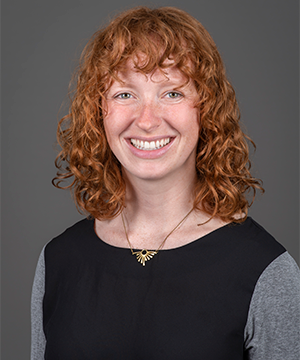
Zina Stavitsky, M.D., is entering her third and final year of the fellowship. Born and raised in Eugene, Oregon, she earned her M.D. from the University of Nevada, Reno, before returning to her home state to complete her pediatric residency at OHSU. As her residency neared its end and she contemplated her future, she realized how much she loved OHSU and how perfect a fit the pediatric hematology and oncology fellowship was for her.
“It’s a great place to work and, even more importantly, a great place to learn,” Stavitsky said. “I just realized, ‘Why would I leave when I have my people and my community here?’ I knew I’d get great training here, so I decided to stay.”
The first year of the program is intensive and focuses primarily on the clinical side. The KDCCP covers fellows’ salary and benefits that first year, which is pivotal in giving fellows the ability to focus on their training and acclimate to their environment. Stavitsky learned a lot about how to communicate and collaborate with children with complex illnesses and their families. The program’s focus shifts toward research and academics the second and third years, though fellows still spend some of their time in the clinic. Stavitsky studies in Roberts’ lab and is researching how neuroblastoma tumors develop.
In both the clinic and the lab, one of the best things about the fellowship is the mentorship, Stavitsky says.
“Dr. Roberts is an expert in neuroblastoma and has a lot of expertise on the clinical side, but he’s also been doing lab research for years and years,” Stavitsky said. “He’s been wonderful in knowing where I’m coming from and keeping me on track with my research.”
Reflecting on Kiwanis’ impact
If Roberts represents the KDCCP’s beginnings, Stavitsky represents its future.
Roberts and Stavitsky’s gratefulness toward Kiwanis for its continued support is rivaled only by their passion for reducing the burden of childhood cancer. And in a time when scientific research faces significant obstacles nationally, consistent support of fellowship programs like the KDCCP ensures vital training, breakthroughs and care can continue to move forward.
“The KDCCP is a community, grassroots organization,” Roberts said. “The number of pediatric hematologists and oncologists they’ve supported and helped train is incredible; there are former fellows all over the country.”
“They’re incredible people,” Stavitsky said. “It’s incredible to feel that support from our community while I do this. It’s been really, really special. I’m so grateful to be able to train in this community I call home.”
Learn more about the KDCCP and how to support it.

Community | Giving
Giving

Community | Giving