



By Darby Kendall
For Ignite Magazine
Header image by Fritz Liedtke
Archival photos courtesy of OHSU Library’s Historical Collections and Archives
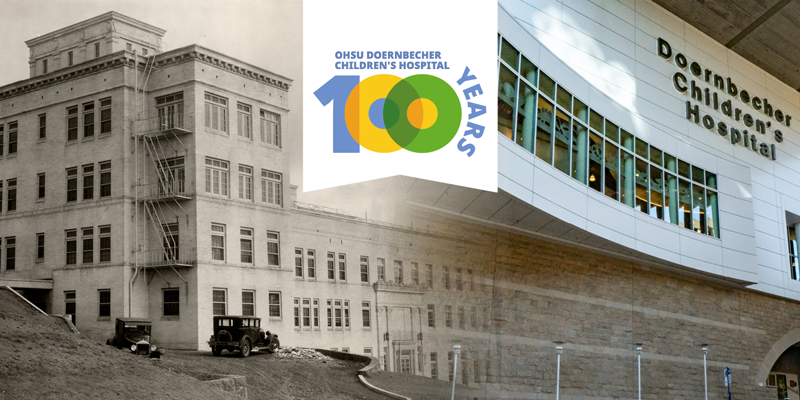
For 100 years, OHSU Doernbecher Children’s Hospital has transformed children’s health and well-being.
The hospital has pushed pediatric medicine forward and led tidal shifts in children’s healthcare — made possible by the expertise and passion from providers, alongside invaluable community and philanthropic support. For a century, Doernbecher has been there for kids and their families and will continue to do so for generations to come.
“When you come to Doernbecher, we’re going to treat you like our family,” said Dana Braner, M.D., FAAP, FCCM, Credit Unions for Kids Chair in Pediatrics and physician-in-chief at Doernbecher. “In your worst moment, we’re at our best. We are going to make sure that if there’s something we can do to help you get through a difficult time, we’re going to do it. That holistic, family centered, unbelievably close care is something that Doernbecher does better than any children’s hospital in the world.”
The early days of Doernbecher
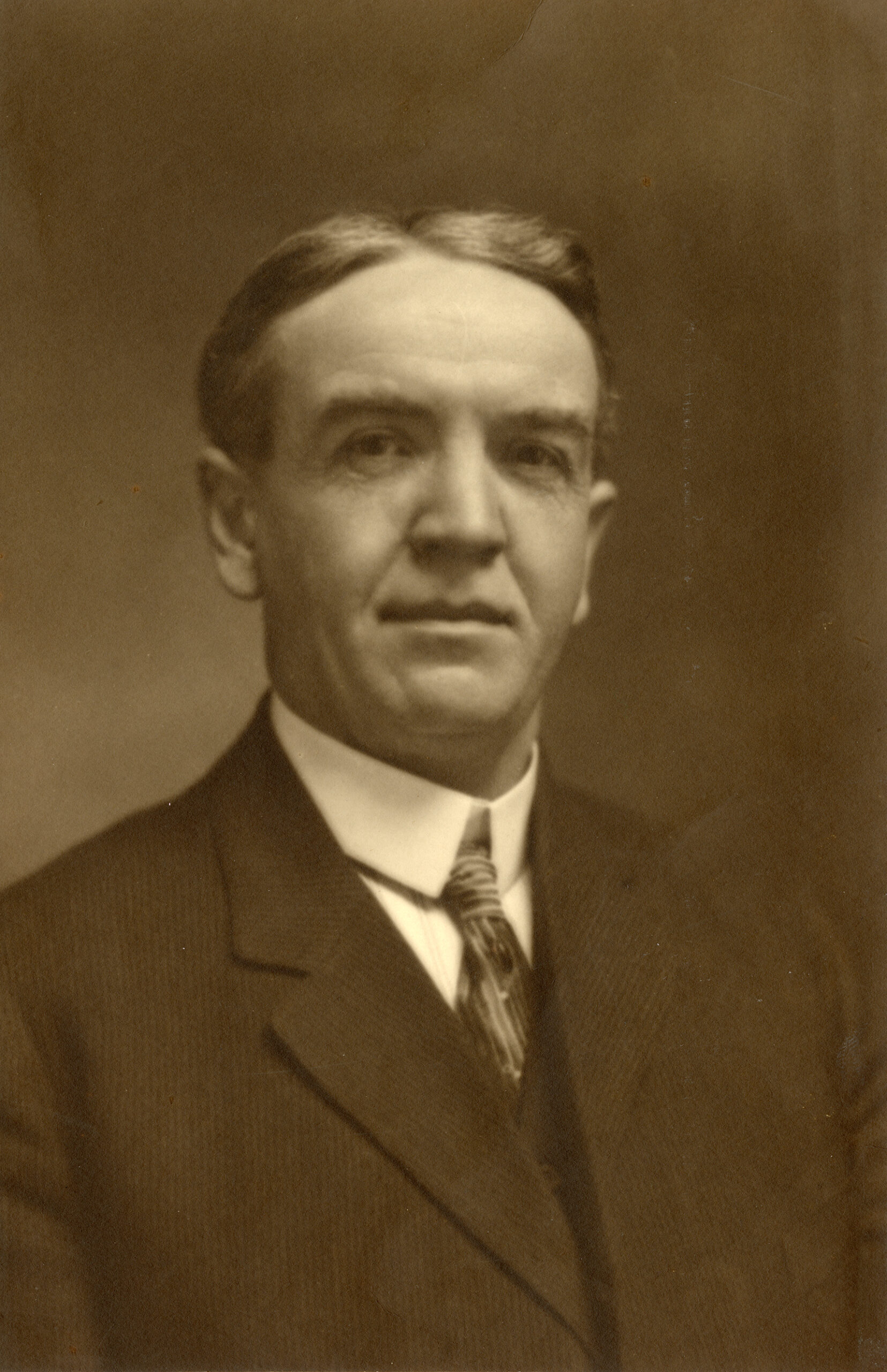
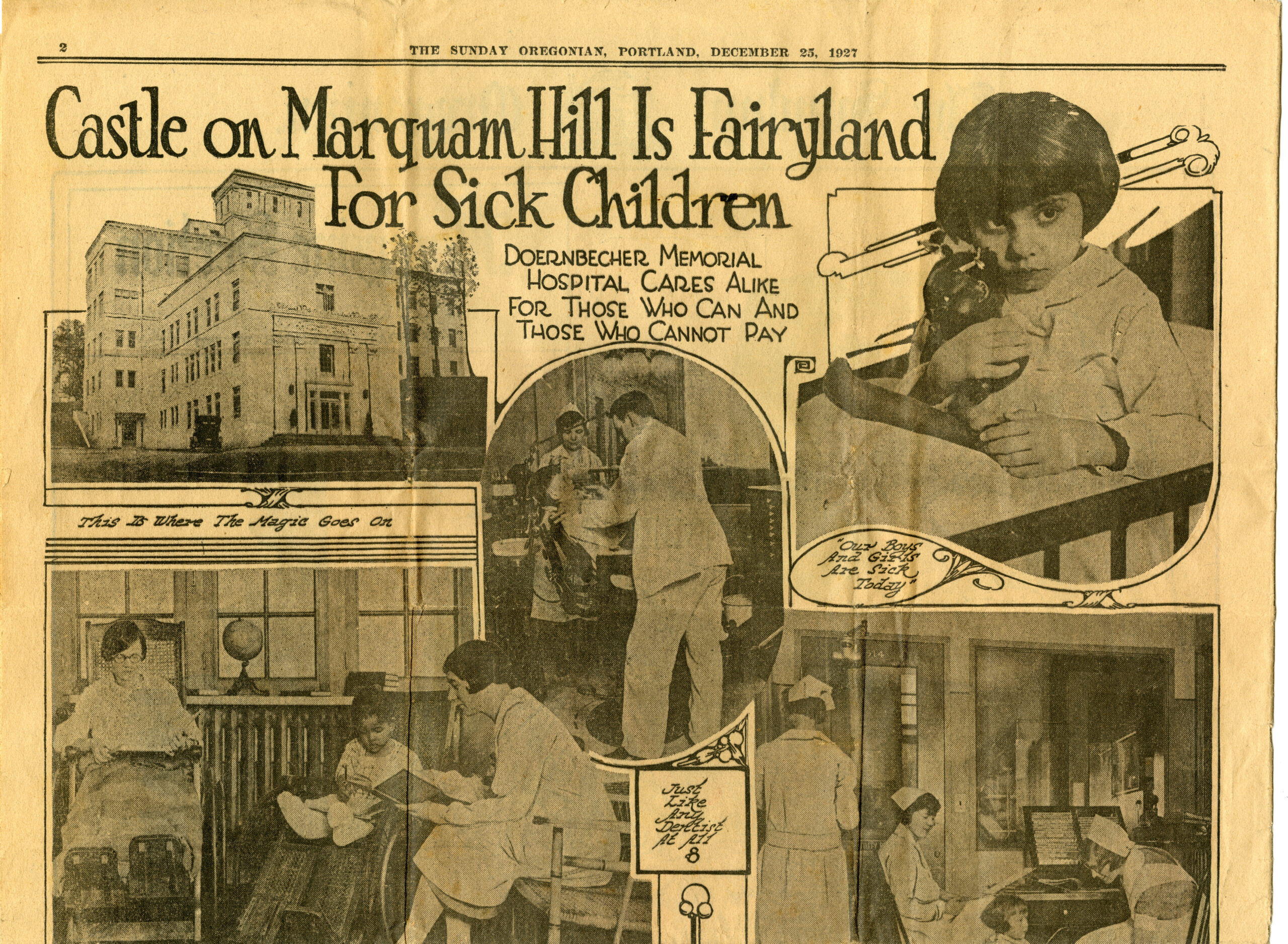
It all started in 1921 with a $200,000 bequest from local furniture maker Frank Doernbecher to benefit the state. His daughter Ada Doernbecher and son Edward Doernbecher gave the money to the University of Oregon Medical School to build the state’s first full-service children’s hospital. An additional $75,000 raised by the newly formed Doernbecher Guild helped the hospital open on August 2, 1926, with 75 beds and five volunteer physicians. The Doernbecher family was quite firm on one point — the hospital that was to bear their name would treat all children, regardless of their ability to pay. That credo stands firm today, benefiting families across Oregon and beyond.
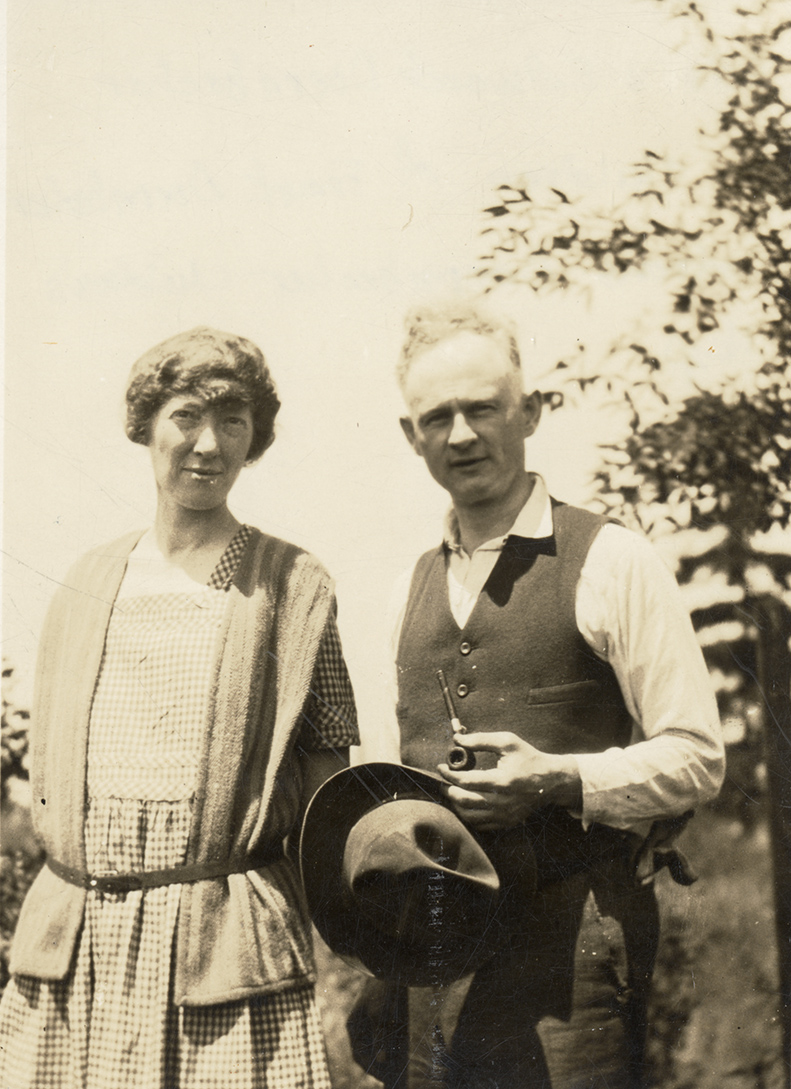
By 1938, the number of children visiting the hospital each year increased tenfold from the initial 216 to 2,649. From its earliest days, Doernbecher was sought out for specialized care that wasn’t available anywhere else nearby for families in need. Due to great community demand, a special clinic for tonsillectomies was established in 1940, which handled 545 cases in the first three months of operation.
William Conklin, M.D., a thoracic surgeon and professor at the University of Oregon Medical School, was the first doctor in the Western United States to perform the rare and difficult “blue baby” operation at Doernbecher in 1947 to treat an infant born with tetralogy of Fallot, a congenital heart defect. Babies born with the condition were extremely weak and sometimes poorly developed due to a lack of oxygen in their bloodstream, but this new technique joined two blood vessels to improve circulation to the lungs. Prior to Conklin’s achievement, local families had to send their children to the East Coast to get the critical surgery.
In 1958, Albert Starr, M.D., performed Oregon’s first pediatric open-heart surgery on 7-year-old Martha VanCleave at Doernbecher. It was a rare occasion where news cameras were permitted in the operating room. In the archival news video, the anchor commented: “Martha is only one of a possible 20,000 people to be given an opportunity for a well-rounded, normal life thanks to corrective heart surgery. The medical team of the University of Oregon Medical School has stepped up its schedule to provide assistance to the numerous people in the Northwest, who, a few years ago, were offered no hope for a full and active life.”
The care of premature babies became a priority in 1951, when the first complete premature infant nursery in the Pacific Northwest opened at Doernbecher. “After three months, we were accepting preemies from all the hospitals in Portland,” said Portland pediatrician Gorham Babson, M.D., in a 1999 interview. “In a year we were sending our nurse with her carrying incubator to Salem, Eugene and other hospitals in Oregon. We were getting busy.” The demand grew, and in 1968, Oregon’s first neonatal intensive care unit (NICU) opened its doors. Today, Doernbecher offers the most advanced neonatal intensive care in the region and is among the nation’s leading providers of care for premature and critically ill newborn.
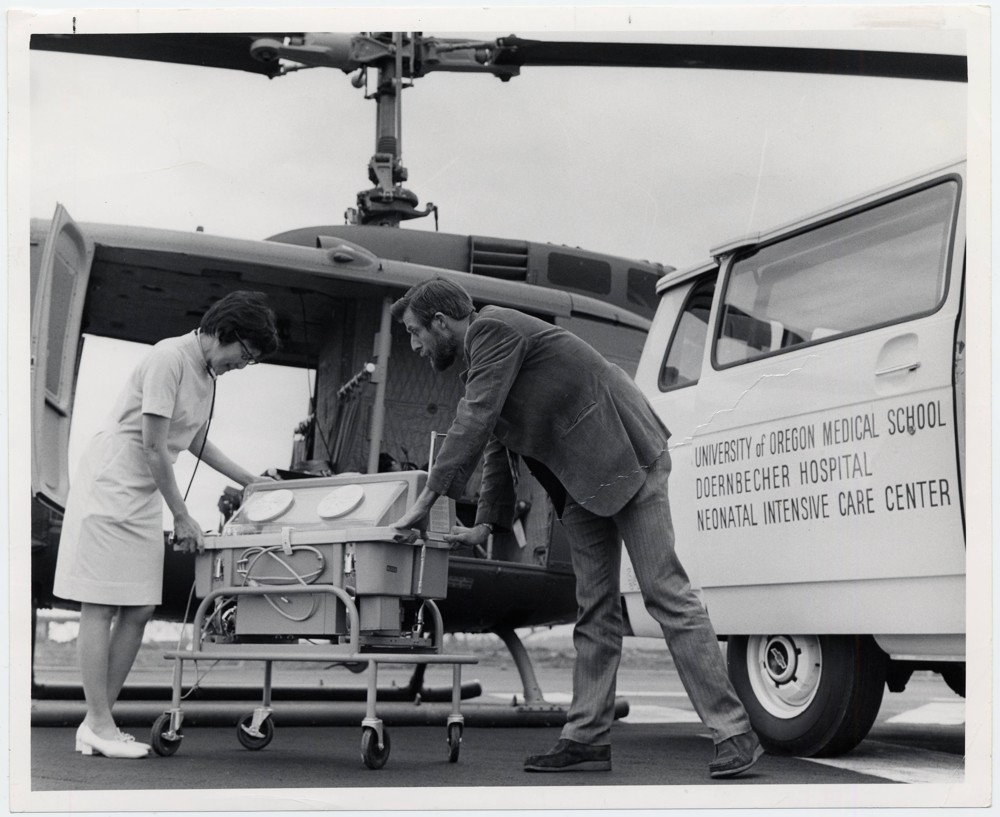
To serve the entire West Coast with these unique resources, the hospital started using helicopters in 1972 to bring fragile babies to Doernbecher. “By 1974, we increased the air transport from zero to one-third of all admissions to the unit,” said Babson. “These admissions were from the coast, eastern Oregon and southern Washington.” In 1995, the Pediatric and Neonatal Transport (PANDA) Team was formed, and today the transport team responds to emergencies throughout the state, making more than 800 trips each year.
Doernbecher brought in subspecialists throughout the 1970s, including pediatric nephrologists caring for children with kidney problems. Two decades before in 1959, Doernbecher had been the site of the world’s first successful kidney transplant on a child, with the patient’s 12-year-old identical twin sister acting as her donor. In 1979, Y.B. Talwalkar, M.D., brought a new form of dialysis to the children of Oregon, which allowed patients to receive dialysis fluid at home instead of at a clinic or hospital. The revolutionary new method increased survival rates and decreased the burden of dialysis on families.
Doernbecher has leveraged rapid advances in technology and medicine to continue improving care and health outcomes through the turn of the millennium. It was the first hospital in the world to test the revolutionary cancer drug Gleevec on kids; the first hospital on the West Coast to offer pediatric iMRI; the first hospital in the Pacific Northwest to offer new FDA-approved treatment for advanced leukemia. Doernbecher emerged as a steadfast provider and beacon of information during the COVID-19 pandemic. It is home to one of the nation’s leading specialists in 3D-printed prosthetics for children. Soon, it will open a dedicated comprehensive center for pediatric neuromuscular disorders.
A century’s worth of radical pediatric healthcare innovation — Doernbecher has been at the center of it all. The best, it seems, might just be yet to come.
A modern approach to medicine
A century after it first opened its doors, “Doernbecher has become a place where new and innovative things happen commonly,” according to Braner.
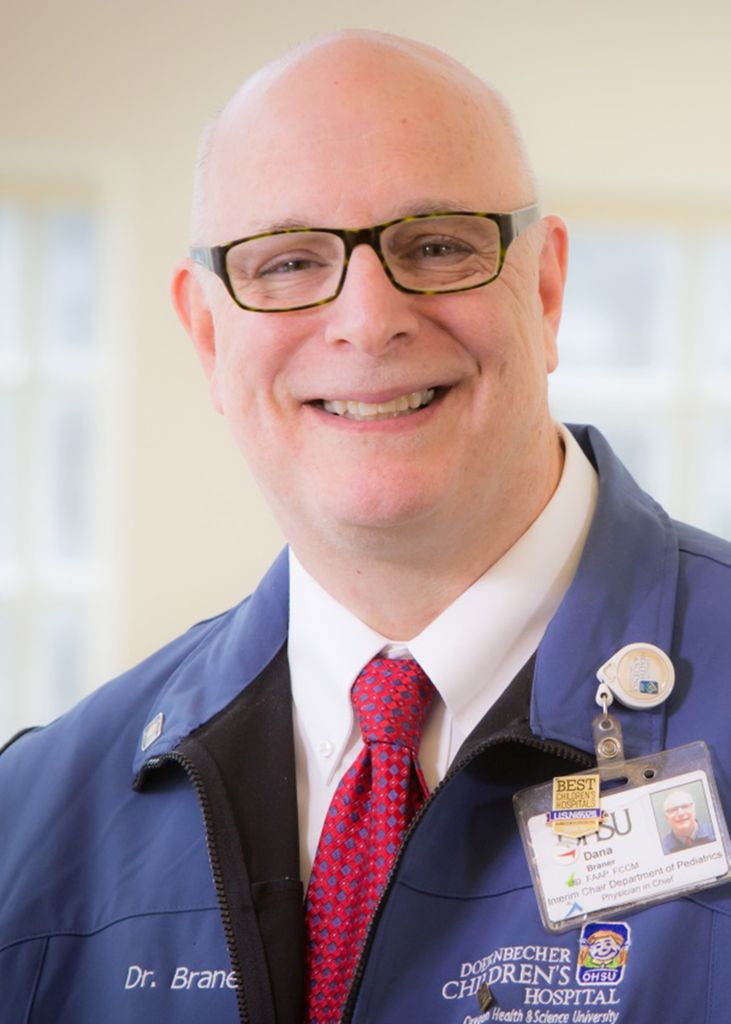
“Modern Doernbecher is a place where the clinical care is extraordinary because of who we are and what we do, and what we do is act as a resource for every child and family that needs us,” Braner said. “Research across the gamut of pediatrics is coming to fruition. We see new cures for pediatric heart disease; we see new therapies for cystic fibrosis; we see new techniques in epilepsy. It covers the panoply of children’s diseases. When I started my career 36 years ago at Doernbecher, the child’s survival was often in question. Now we look at those parents and we say, ‘Boy, where are they going to college?’ It’s a very different landscape.”
There’s been an explosion of research and advancements across a wide swath of areas, but perhaps no specialty has seen such intense growth as in-utero surgery. The field of fetal surgery is relatively new in medicine, and diseases and disorders that are well understood in adults or adolescents are often uncharted waters in fetuses. Advancements in maternal-fetal medicine have enabled increased understanding and discovery — and sometimes even treatment — of these conditions before birth.
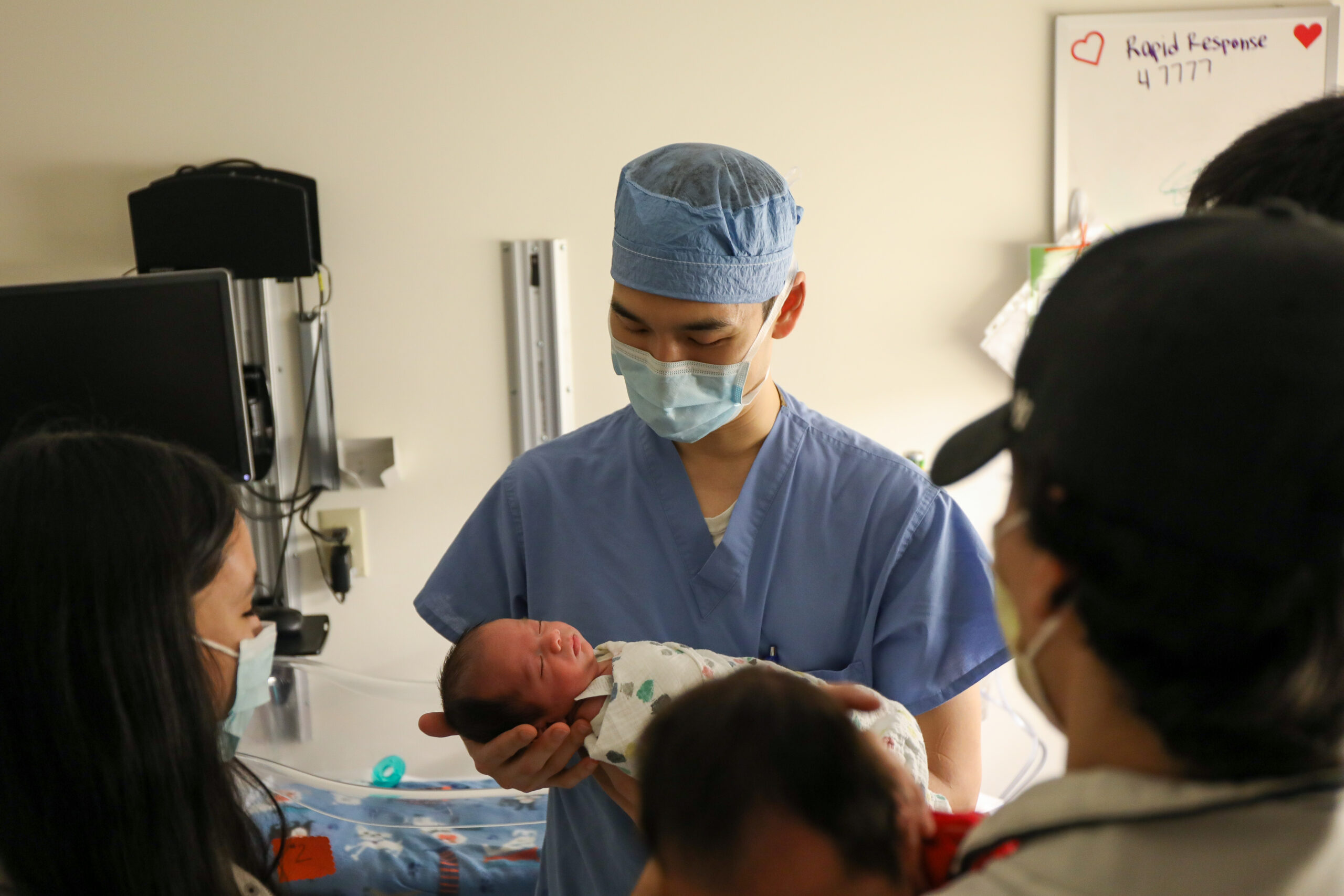
Pediatric and fetal surgeon Raphael Sun, M.D., FACS, FAAP, is the co-director of Doernbecher’s Fetal Care Program, which provides in-utero treatments for nearly a dozen complex conditions that occur during pregnancy. It is one of only a handful of centers in the country to provide the highest level of maternal, fetal and neonatal care in one location. Sun, along with maternal-fetal surgeon Andrew Chon, M.D., have performed specialty in-utero surgeries for life-threatening conditions such as twin-to-twin syndrome and hydrops. In 2024, Sun and Chon performed the region’s first in-utero spina bifida repair.
“Conditions in which the outcome is fatal, if you don’t try pushing the envelope, you’re left with a fetal demise,” said Sun. “But if you do try, you may be able to not only save a life, but you could potentially change the way we practice medicine. When others say, ‘No,’ fetal surgeons say, ‘Yes.’ What was not possible before is possible now. These are the most complex anomalies we see and can weigh heavily on our shoulders, but it can be very, very gratifying if we can help.”
Because research on adults cannot be simply sized down for kids, the work being done at Doernbecher is essential for the health of future generations and can improve outcomes for today’s patients. Cancer is one field where this particularly rings true, as childhood cancers often stem from different cells than those in adults and can grow more quickly in the body. This can make pediatric cancer difficult to treat, so the efforts of clinical researchers at Doernbecher is paramount for eliminating the disease.
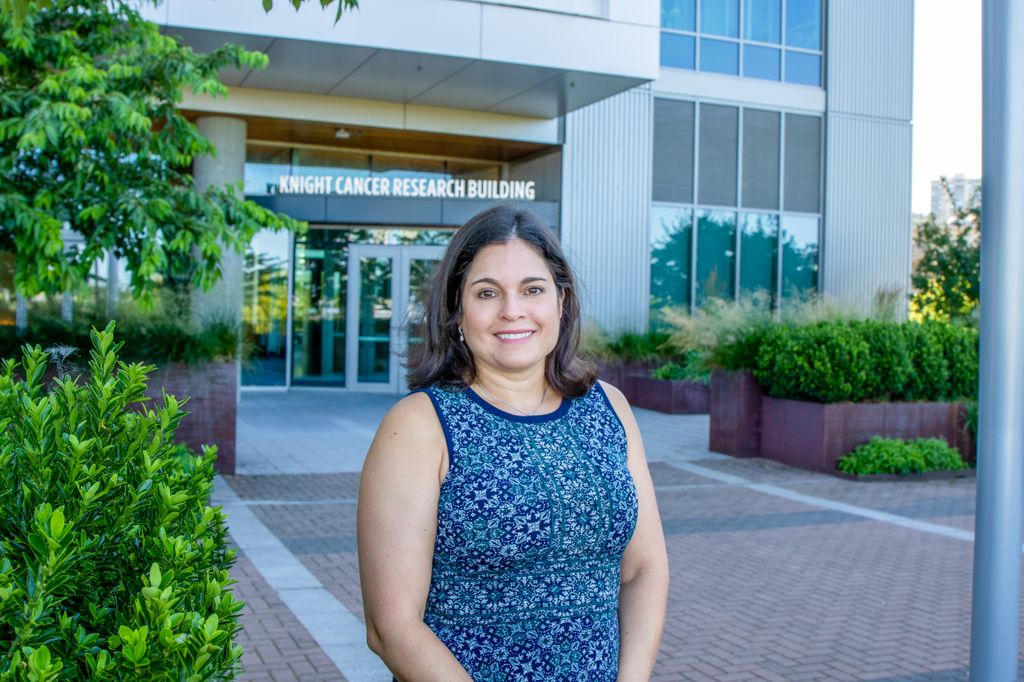
Eneida Nemecek, M.D., M.S., M.B.A., director of the pediatric bone marrow transplantation program at Doernbecher, led a multidisciplinary team that advanced the hospital’s efforts to implement several novel cellular therapies for cancer and blood disorders, including chimeric antigen receptor T-cell therapy for acute lymphoblastic leukemia and gene therapy for sickle cell disease and thalassemia.
“One of the things that makes working at Doernbecher truly unique is our ability to collaborate and exchange ideas across pediatric and adult clinics and laboratories, allowing the entire institution to come together to address complex challenges,” said Nemecek, the Nancy Jaggar Blount Endowed Professor in Pediatric Oncology. “It’s a remarkable advantage to work in an environment where experts are both willing and encouraged to share ideas and resources. There is a collective commitment to discovery and to translating knowledge from the lab to the clinic to advance science and benefit all patients in need.”
Doernbecher’s decades-long leadership in the field has led to swift evolution in children’s healthcare, and the providers and researchers there are making sure the progress never stops. Science is an investment, and the strides Doernbecher makes today enables the innovations of tomorrow.
“Research,” Braner said, “is really our gift to the future.”
Advocating for patient care
Doernbecher has recognized the importance of family-oriented care since the beginning. Its drive to push pediatric healthcare forward includes holistic, whole-person care — care that involves caregivers and ensures patients and families are comfortable, informed and advocated for during their hospital stays.
When Shirley Thompson, R.N., and Betty Weible, R.N., started as nurses at Doernbecher in the 1940s, families were allowed very little contact with their hospitalized children. Before widespread use of antibiotics like penicillin, hospitals were afraid parents might bring in infection. Thompson was instrumental in loosening the restrictions on visiting hours. Today, Doernbecher is committed to the concept of family-centered care, and parents are encouraged to have as much close contact with their children as possible during their stay at the hospital.
“When I started [in 1947] the visiting hours were Sunday afternoon for an hour and Wednesday night for a half an hour… [The parents] would stand out in the hallway outside of the wards where the kids were, and whichever family was there, we’d push that crib up to the door. And the kids would sit in their cribs howling, and the moms and dads would be standing out in the hallway weeping because that was as close as they could get to them,” said Weible in a 1999 interview.
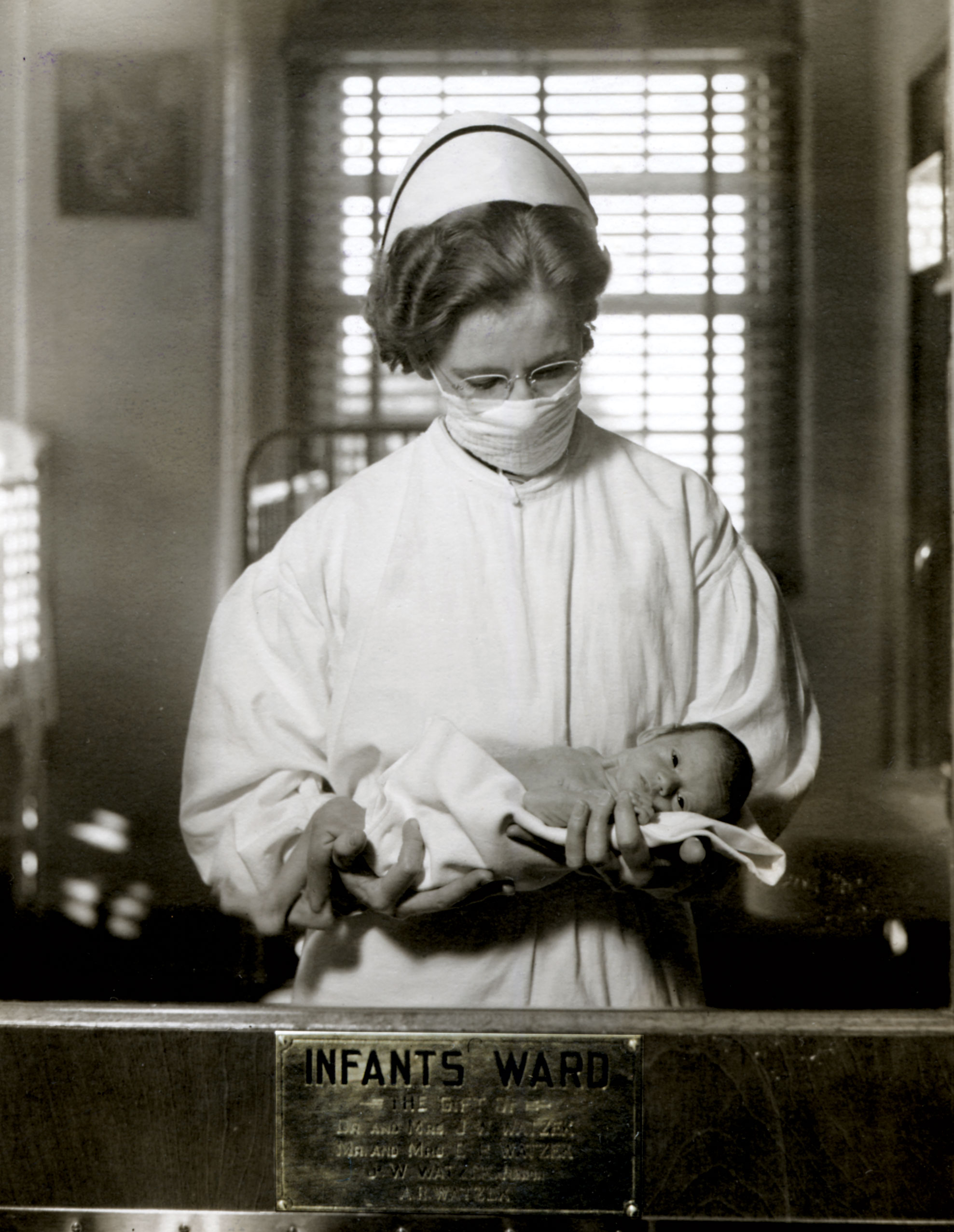
Patient advocate Grace Phelps, R.N., was Doernbecher’s superintendent from 1926 to 1942, and she set the stage for the multitude of programs available today. Passionate about the care of children, Phelps was one of Doernbecher’s most outspoken advocates, raising public awareness of its achievements while emphasizing the need for additional philanthropic support. She made sure Doernbecher saw to the emotional and physical needs of its young patients — a philosophy that still echoes through the halls of the hospital.
“The world has come to realize that the children of today are the men and women of tomorrow. If we wish the world to get better, it behooves us to see that children are made healthy and whole and kept that way,” said Phelps in a circa 1930s presentation.
Braner echoes that sentiment almost a century later. “Children are literally the only future we have, and yet they don’t get represented as often as we need them to be. That advocacy piece is unbelievably important, and I think we do it in a way that is incredibly innovative. We do things at Doernbecher that really haven’t existed before,” he said.
“100 years later, Doernbecher nurses continue the rich tradition of advocacy supporting patients and families with unique needs in unique and compassionate ways while taking care of the whole person. Nursing at Doernbecher is truly a calling,” said Pauline Orr, D.N.P., RN, vice president and chief nursing officer at Doernbecher.
When it comes to family-oriented care, Doernbecher is proud to serve the familial extensions of every child they help. Food insecurity is a pervasive social issue both nationally and within Oregon, and that applies to hospitals as well. A child’s hospitalization often exacerbates food insecurity for families and can create insecurity among those who haven’t experienced it before. The Nourish food-security program at Doernbecher partners with 18 local food pantries to address longer-term food insecurity among patient families. Any family can access the array of foods in the pantry at Doernbecher’s PICU.
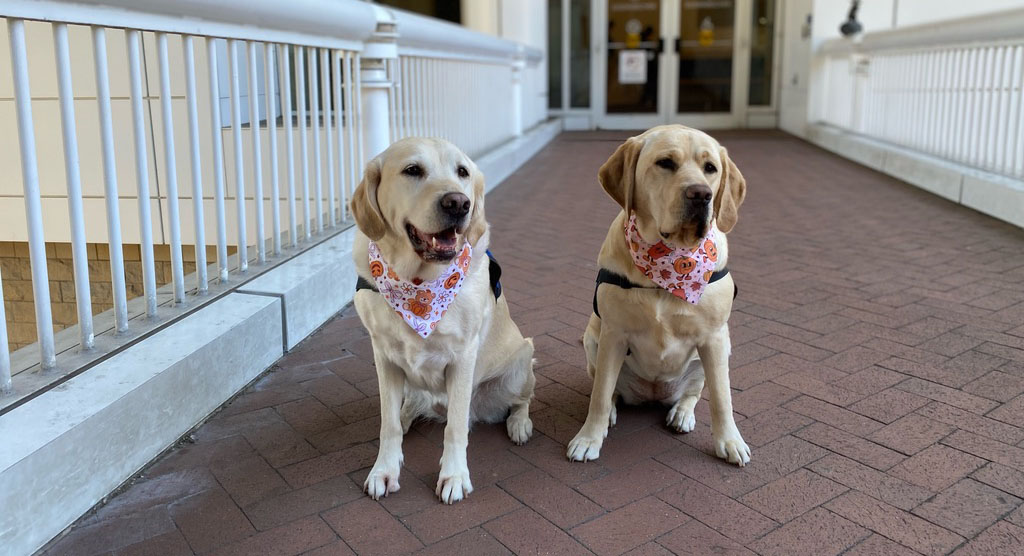
The Child Life Therapy Program is another outstanding resource offered to families at Doernbecher. Child life specialists are part of kids’ care teams, helping them cope with being in the hospital through play, education and creative activities. Their enriching program includes special visitors, weekly video bingo games, a costume closet, music and animal-assisted therapy.
Beyond therapy and enriching activities, Doernbecher also offers legal assistance through OHSU’s Medical-Legal Partnership program to low-income patients and their families, including the youngest patients being cared for in Doernbecher’s NICU. These partnerships improve patients’ health and well-being, including overall better health outcomes, improved compliance with medical treatment, reduced stress and increased use of preventive healthcare services.
“We have lawyers in our newborn intensive care unit, and they help parents with problems that cause prematurity to an extent, problems like poverty, food insecurity, housing insecurity and domestic partner violence. They assist with all those things,” Braner said. “Something that I believe strongly is nobody in the world does patient advocacy better than Doernbecher. Hopefully we are blazing a trail that others will follow.”
Made possible by philanthropy
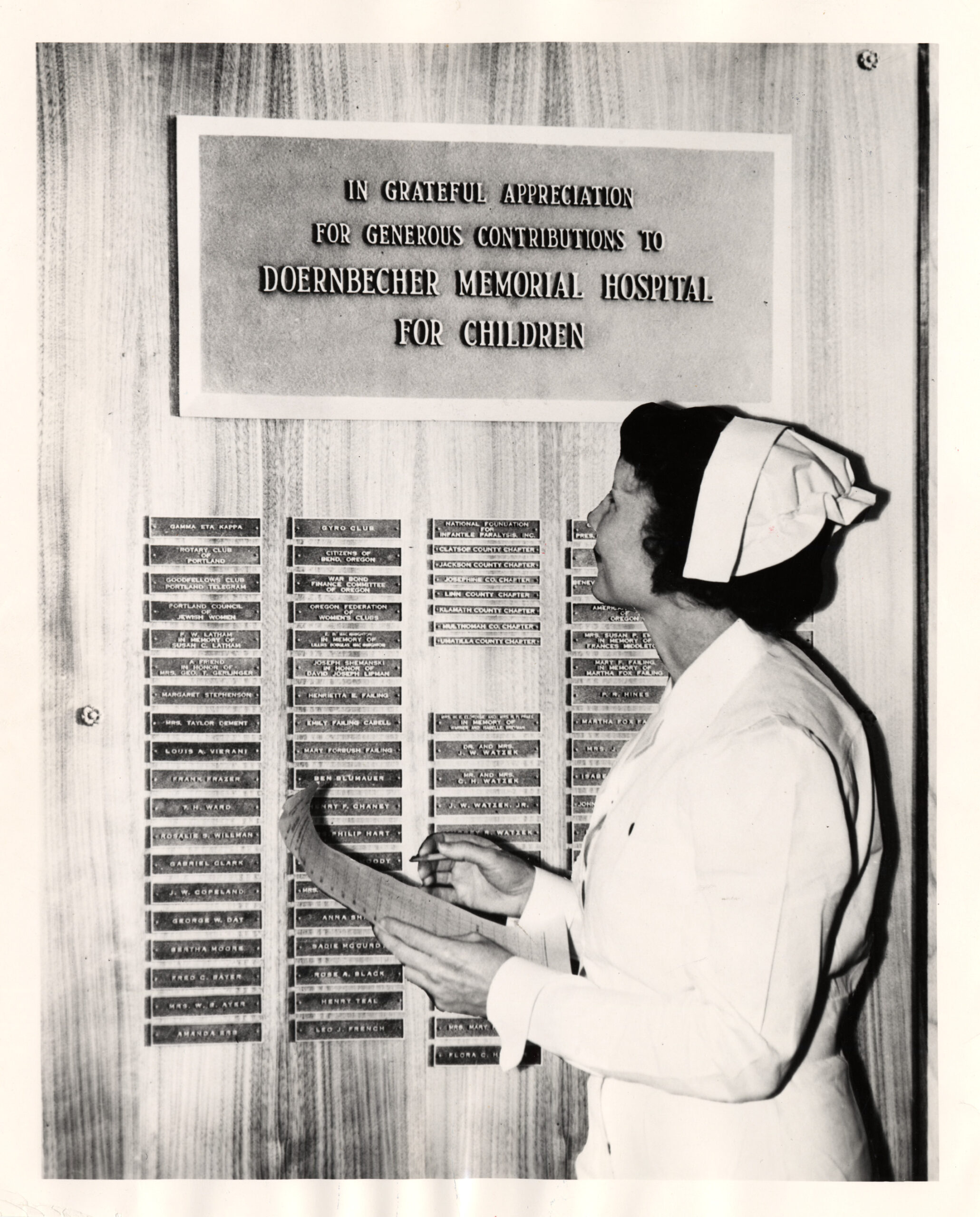
Doernbecher’s opening in 1926 was only made possible through philanthropy from the generous giving of Frank Doernbecher and the Doernbecher Guild. Today, that legacy carries on, enabling Doernbecher to bring game-changing people, programs and tech to the region through the donations it receives.
“Our philanthropists don’t just give us money. They give us their time, their treasure and their talent,” Braner said. “They help us figure out new ways to go forward and to be on this journey from good to great.”
New technology like the intraoperative MRI (iMRI), purchased with the power of philanthropy, changed the way surgeons at Doernbecher conduct their lifesaving work. “When our neurosurgeons started using the iMRI, on the first day they were like, ‘Hey, we’re not operating without this machine, because this changes the standard of care,’” Braner said. “The only way a children’s hospital like Doernbecher can afford that kind of machine is through philanthropy. Without philanthropy, that doesn’t exist.”
Another example of the leaps and bounds made possible by donations is the new hybrid operating suite that combines a pediatric operating room with a cardiac catheterization lab, making heart surgery safer and more efficient for vulnerable patients at Doernbecher. Now, surgeons and interventional cardiologists can perform multiple or complex procedures together, in one setting, without adding risk and spending precious minutes in transport.
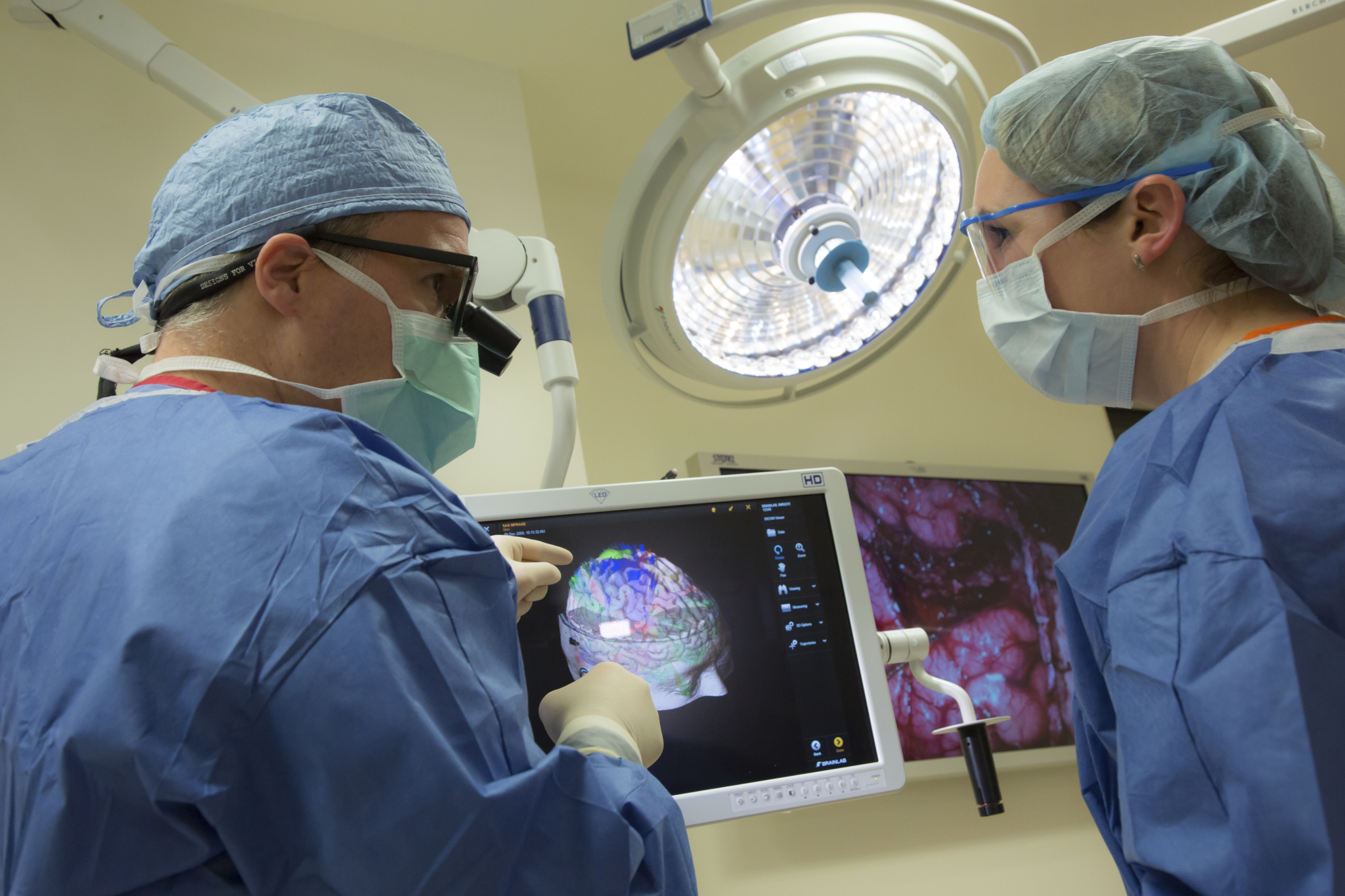

Beyond major investments, donations of all sizes fund life-changing programs throughout the hospital. The Doernbecher Philanthropy Board, a volunteer board comprised of community leaders, crucially supports the missions of the hospital through advocacy and critical fundraising. Support in the Pacific Northwest and beyond, from high school students raising money through Kids Making Miracles to Nike’s partnership through Doernbecher Freestyle, fundraising fun runs to video game competitions, allows Doernbecher to provide top-notch care and service.
“We don’t open up our doors without philanthropy, and that’s a pure fact,” Braner said. “Without the support of the community, we couldn’t be one-tenth of the hospital we are today.”
The next century of health
Children are our future, and Doernbecher will continue to be there for them every step of the way. Pediatric healthcare has made giant strides over the last 100 years, and providers are excited to see what they’ll discover next. Combining patient advocacy with leading edge care, the staff, doctors and nurses at Doernbecher uphold the founding principles of the hospital while utilizing the amazing new technologies made possible through philanthropy. Doernbecher has tailored their care and facilities to meet the needs of Oregon’s smallest patients, because every child is worth it.
“My biggest hope for the future of Doernbecher is that we continue to be a resource for every child and family that needs us. I cannot imagine this state without the resources of Doernbecher. As a critical care doctor, I’m around occasionally when a child passes away, and it leaves a mark; it leaves a hole every time, because there went all of that child’s potential to change the world for the better. I think every child will change the world for the better, and it’s ripe for it, especially now. We serve as advocates for children, because they deserve it,” Braner said. “Going forward, my biggest hope for Doernbecher is that we continue to get support from the government, from donors, from institutions, in order to be the best children’s hospital that we need to be.”

Grassroots support of Doernbecher Children’s Hospital runs deep
From the original fundraising efforts of the Doernbecher Guild, community-led fundraising has been vital to the people and programs of Doernbecher over the years. Here are just a few of the current community fundraising programs that support the children’s hospital in imaginative and creative ways.
1985: Kiwanians start fundraising for Doernbecher. In 1998, they launch the Kiwanis Doernbecher Children’s Cancer Program and have now raised more than $5 million for pediatric oncology.
1986: The Credit Unions for Kids program is established by local credit union leaders to raise funds for Doernbecher. Since then, this dedicated consortium has raised $23 million for critical projects across the hospital.
1989: The chapter-based Friends of Doernbecher program is established under the leadership of Anne Grimwood and Sue Miller with hundreds of volunteers raising millions of dollars for Doernbecher through various fundraising activities, including the Heart of Doernbecher and Cards for Kids. In 2003, the group creates the Friends of Doernbecher Grant Program, which has now funded over $2.7 million to seed innovative research projects.
1990: Doernbecher becomes a Children’s Miracle Network hospital. Through the CMN partnership, local partners and programs have raised $68 million for Doernbecher in the last 36 years.
1991: Kids Making Miracles, a school-based fundraising program, is launched at the direction of Myron Child. Students across Oregon and southwest Washington have since raised $12 million for Doernbecher.
2004: Doernbecher Freestyle is born around Michael Doherty’s kitchen table. Over the last 22 years, this extraordinary partnership with Nike has raised $44 million for Doernbecher.
2023: Timberline Daydream launches an annual benefit concert and bike race at Timberline Lodge, bringing together musicians, athletes and community to raise funds for the hospital. Since the first year, this event has now raised over $700,000 for Doernbecher.