
Explain It! Kerri Winters-Stone, Ph.D.
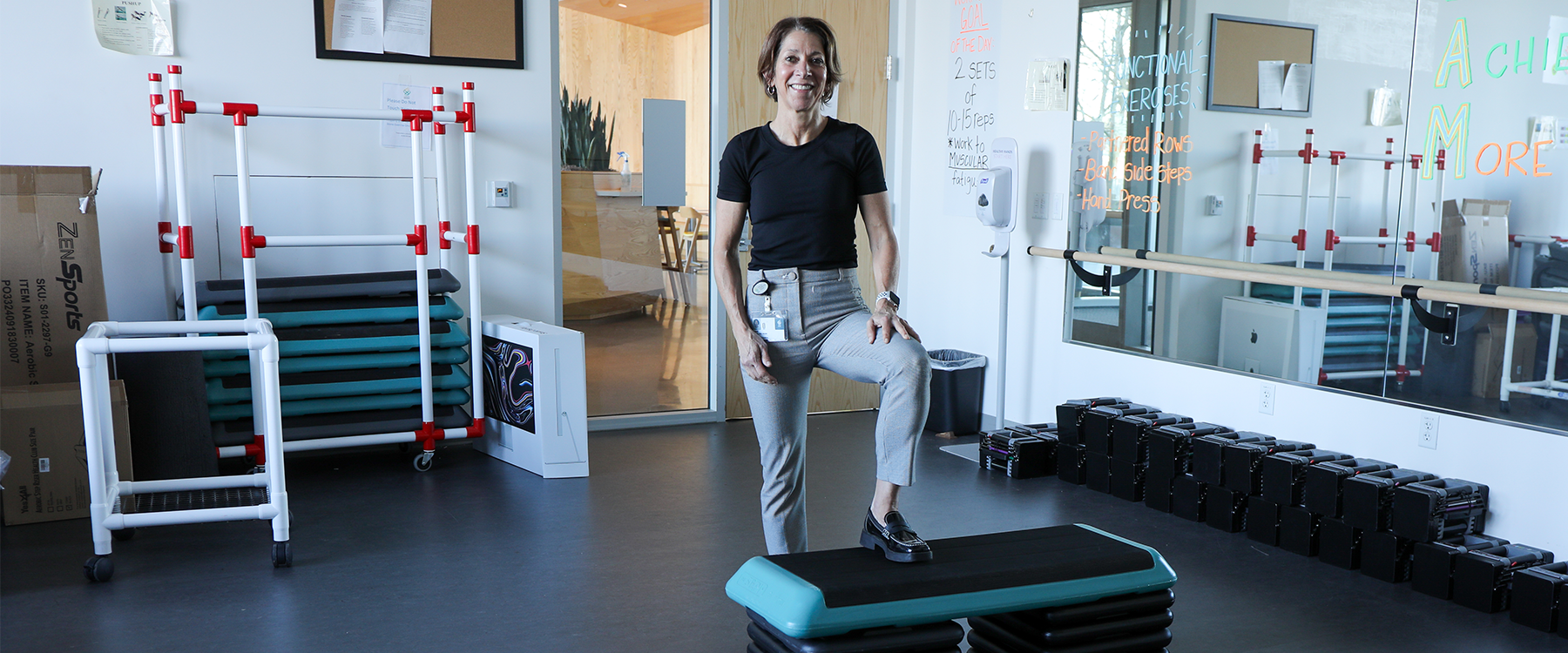
Explain It! showcases the fascinating, impactful research at OHSU. Kerri Winters-Stone explains her work and why she believes exercise is medicine.
Explain It! showcases the fascinating, impactful research at OHSU. Kerri Winters-Stone explains her work and why she believes exercise is medicine.
Cardiovascular science has grown leaps and bounds in research and development since its creation. Howard Song, M.D., Ph.D., is helping revolutionize the field.
OHSU research endures with philanthropy’s vital support
Two computational biologists were named innovators of the year for the software tool they developed to analyze complex data from wet and dry labs.
Ph.D. candidate Kenneth Riley has developed a new technology that could detect cancer by analyzing a patient’s blood sample.
Hear from three OHSU Doernbecher Children’s Hospital providers from a variety of specialties for insight into the vital and life-saving importance of pediatric research.
The Knight Cancer Institute and CEDAR have recruited, organized and empowered dozens of brilliant, passionate people from radically different scientific backgrounds to come together around a common goal and solve complex problems. Meet eight scientists who are bringing early cancer detection into a new era.
Ngo’s work involves analyzing blood samples for signs of early disease, aiming to detect signals from the body that mark transitions from healthy to cancerous states.
Rames’ work with microscopy and imaging technologies allows him to look at cellular structures like mitochondria and the ways they’re impacted by cancer.
Song specializes in machine learning and AI, applying them to biomedical data, especially images focusing on cancer.


Today is a global celebration of giving — an opportunity to support the causes that matter the most to you. Will you join us?
 Give Now