



Thousands of little moments comprise the vast, far-reaching impact of the OHSU Knight Cancer Institute
By Josh Friesen
For Ignite Magazine
Impact is measured in moments.
The warmth of a smile. A new scientific discovery. A hope-building conversation. A lifesaving procedure. The impact of the OHSU Knight Cancer Institute is immense. It stretches across the world, reaches back through time and races boldly into the future. But a closer look reveals a colorful mosaic made up of countless stories of inspiration.
Stories of compassion. Stories of persistence. Stories of impact.
Frank, Lisa and Say’s lives were forever changed by the care they received at the Knight Cancer Institute. These are their stories.
Frank
Frank Young never liked naps.
So in 2016, when he began needing an afternoon snooze each day to fight off an onset of fatigue, he knew something was off. The energy he’d always had was slipping away.

Then came the cold symptoms, night sweats, trouble breathing, weight fluctuations and waves of nausea. Young’s body was trying to tell him something, and when he saw a cancer specialist in January 2017, he learned what it was.
Cancer. Young had leukemia and non-Hodgkin’s lymphoma. Over the next two years, Young underwent chemotherapy treatment at Compass Oncology for both.
“The first rounds of chemotherapy took care of the leukemia,” Young said. “But the non-Hodgkin’s lymphoma proved really tricky. It kept moving around in my body and mutating. After three major rounds of chemotherapy my oncologist at Compass suggested I see Dr. Richard Maziarz at OHSU, who was championing this unique kind of stem-cell treatment.”
Richard Maziarz, M.D., professor of medicine in the OHSU School of Medicine and medical director of the cellular therapy program at OHSU, was helping lead the development of an innovative new treatment: CAR-T cell therapy. A form of immunotherapy, CAR-T cell therapy involves collecting a patient’s own blood cells, genetically engineering them to attack lymphoma cells and infusing them back into the patient.
Maziarz was senior investigator on the clinical trial that in 2018 led to the approval of Kymriah, the first drug in the U.S. to use CAR-T cell therapy. The Knight Cancer Institute was one of the few centers in the nation to use Kymriah to treat lymphoma, and OHSU Doernbecher Children’s Hospital was the first hospital in the Pacific Northwest to offer Kymriah to patients with B-cell acute lymphoblastic leukemia.
When Young arrived at the OHSU Knight Cancer Institute and met Maziarz in 2020, he knew he was in the best hands.
“He was very honest and open with me,” Young said. “He sensed the urgency of this event and was ready to do something about it.”
Young underwent CAR-T cell therapy for about a month. Scans showed no signs of cancer after his treatment and have remained clear for the last five years.
“With their guidance and intelligence, I was able to transcend cancer,” Young said. “I’m just so grateful to be here, to be alive, to be able to create and think, and that I came into the orbit of such kind and caring physicians.”
Lisa
Lisa Sayer never passes up an opportunity to make someone laugh.
So when she received the results of her CT scan and saw a large, cancerous mass growing inside her abdomen, she had a zinger ready to go.
“I thought, ‘Anything this big needs a name,’” Sayer said. “I decided we’d name it ‘Bubba.’ When I told my surgeons, they laughed. That is my personality. That’s just the way I deal with stuff.”
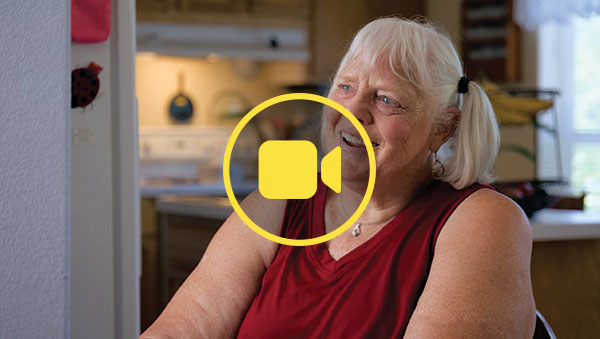
Sayer has navigated a lot of hardship recently. In September of 2021, her husband of 19 years, Larry, passed away. About a year later, Lisa began experiencing hair loss and weight gain, initially chalking them up to entering her 60s.
Eventually, her symptoms reached the point where she went in for a CT scan, the results of which revealed the existence of the cancerous mass and diagnosed Sayer with ovarian cancer. A month later, Sayer underwent surgery at OHSU to remove the cancer only to learn she actually had appendix cancer and that it was spreading throughout her abdomen.
“Thank goodness OHSU had just brought on an appendix specialist, and Dr. Sood entered,” Sayer said.
Divya Sood, M.D., is an assistant professor of surgery (surgical oncology) in the OHSU School of Medicine. Among her specialties is a two-step treatment called hyperthermic intraperitoneal chemotherapy (HIPEC) surgery. The first step involves a cytoreductive surgery to remove tumors. The second step, HIPEC, fills the abdomen with a heated liquid chemotherapy to treat and kill any residual microscopic cancer cells remaining.
HIPEC is not a new procedure, and until recently, it wasn’t considered a treatment option for patients like Sayer with metastatic cancers. As oncologists learn more about metastatic cancer behavior, however, they’ve discovered HIPEC’s viability as an effective treatment. Sood is helping lead HIPEC’s renaissance, and OHSU is one of two health care centers on the West Coast that offers the treatment.
“My recovery was amazing,” Sayer said. “I’m so thankful for Dr. Sood and for the surgery that was possible. They knew exactly what to do, and they did it. I was afforded a future because of those wonderful people.”
Sayer has had no signs of cancer since her HIPEC procedure. She’s an avid hiker, rides her purple trike to her church and is a radiant presence in the lives of her friends, family and neighbors. She enjoys working in her garden, which was originally planted by her late husband.
“I think I have a different joy because of an appreciation for life,” Sayer said. “I want to live that much more.
Say
Say holds family, connection and togetherness close to her heart.
So when she was diagnosed with pancreatic cancer in April 2020, it’s no surprise her family directed her to the OHSU Knight Cancer Institute for treatment.
Say is a constant presence in her two granddaughters’ lives. She raised two sons by herself after emigrating to the United States from Laos. One of her sons, Tom, is now a family medicine physician. As he watched his mother’s symptoms intensify from chest pain and acid reflux to itchiness and painless jaundice, he began to fear the worst.
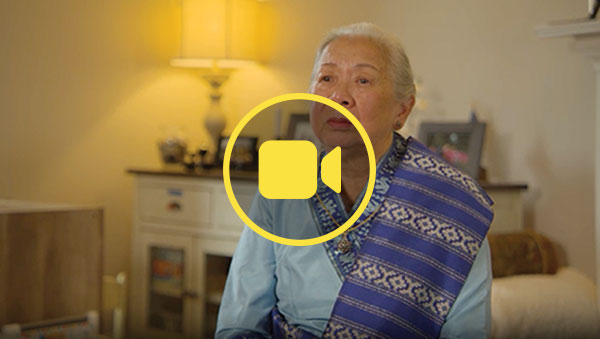
“I remembered learning in medical school how when you have painless jaundice with no history of liver disease or alcohol use, the worst fear is pancreatic cancer,” Tom said. “She had a biopsy, and they told me it looks like pancreatic cancer. I told them my mom would want to hear the news from me and not someone else. The first person she wanted to see after receiving the news was her granddaughter.”
Say and her family were introduced to Brett Sheppard, M.D., William E. Colson Chair of Pancreatic Disease Research, co-director of the Brenden-Colson Center for Pancreatic Care, and professor of surgery (gastrointestinal and general surgery) in the OHSU School of Medicine, and Adel Kardosh, M.D., Ph.D., an assistant professor of medicine (hematology/medical oncology) in the OHSU School of Medicine and medical director of clinical research in the OHSU Knight Cancer Institute.
“The first meeting, I went in with my mom, and they said they’re going to do everything they can to beat this,” Tom said. “I was scared as heck, feeling hopeless. I think sometimes we lose sight of optimism. They gave me hope.”
Say was enrolled in an investigator-initiated clinical trial conducted by Kardosh that began with two months of radiation treatment, followed up with surgery and culminated in a chemotherapy regimen. The complex surgery, known as the Whipple procedure, was done by Sheppard, who removed the area of the pancreas affected by the cancer.
While clinical trials offer promising new treatment opportunities for many cancer patients, populations in underserved and rural communities lack equitable representation. Led by Eneida Nemecek, M.D., M.S., M.B.A., associate director of clinical research at the Knight Cancer Institute and the Nancy Jaggar Blount Endowed Professor of Pediatric Oncology, the Knight Cancer Institute is working toward removing barriers to access and increasing clinical trial participant diversity.
Say’s surgery recovery went smoothly, and afterward, she began a five-year surveillance period. Motivated by her granddaughters, Say followed her doctors’ instructions to the letter, stayed active and kept to a strict sleep schedule. Scans initially showed the cancer slowly disappearing. Two years into surveillance, the cancer was gone. Her final surveillance appointment was April 2025, almost exactly five years to the date from when she was diagnosed.
“The feeling of family is crucially important,” Tom said. “And we found family at OHSU.”
“Everybody took care of me,” Say said. “They were good to talk to and very nice. Thank you to everyone who took care of me. I’m still alive.”
Resetting the standard
The OHSU Knight Cancer Institute has established itself as the premier cancer center in the Pacific Northwest and is revered worldwide for its continued innovations in specialized, whole-person cancer care.
And the work is still being done.
“We work really, really hard to treat the entire person,” said Keren McCord, LCSW, patient and family service department manager at the Knight Cancer Institute. “We recognize we can treat you medically, but if we miss treating the whole person, we’ve missed the mark.”
The recent, historic $2 billion gift from Phil and Penny Knight in August of 2025 will further transform the patient care experience at OHSU. The largest single donation ever made to a U.S. university, college or academic health center, the gift will establish the Knight Cancer Institute as a self-governed entity within OHSU. Furthermore, when the Vista Pavilion opens its doors in April of 2026, the state-of-the-art, 513,000-square-foot addition will increase OHSU’s total bed count to 750 and increase OHSU’s capacity to provide robust, specialized cancer care.
“It can seem impossible to navigate the health care system after being diagnosed with cancer. We’re going to change that,” said Brian Druker, M.D., CEO of the Knight Cancer Institute and the JELD-WEN Chair of Leukemia Research. “We have revolutionized the way we detect and treat cancer. Now we are going to transform the way we care for patients while continuing to develop innovative treatments.”
From that first appointment all the way through to survivorship, the Knight Cancer Institute’s commitment to patient-centered care is the heart and soul of everything it does. Every conversation and consultation. Every treatment regimen and surgery.
Every moment — for as long as it takes until the burden of cancer is eliminated.